
 RESEARCH
Research exploring how relationships,
resources, and practices can
drive inclusive and resilient
spatial/territorial transformations.
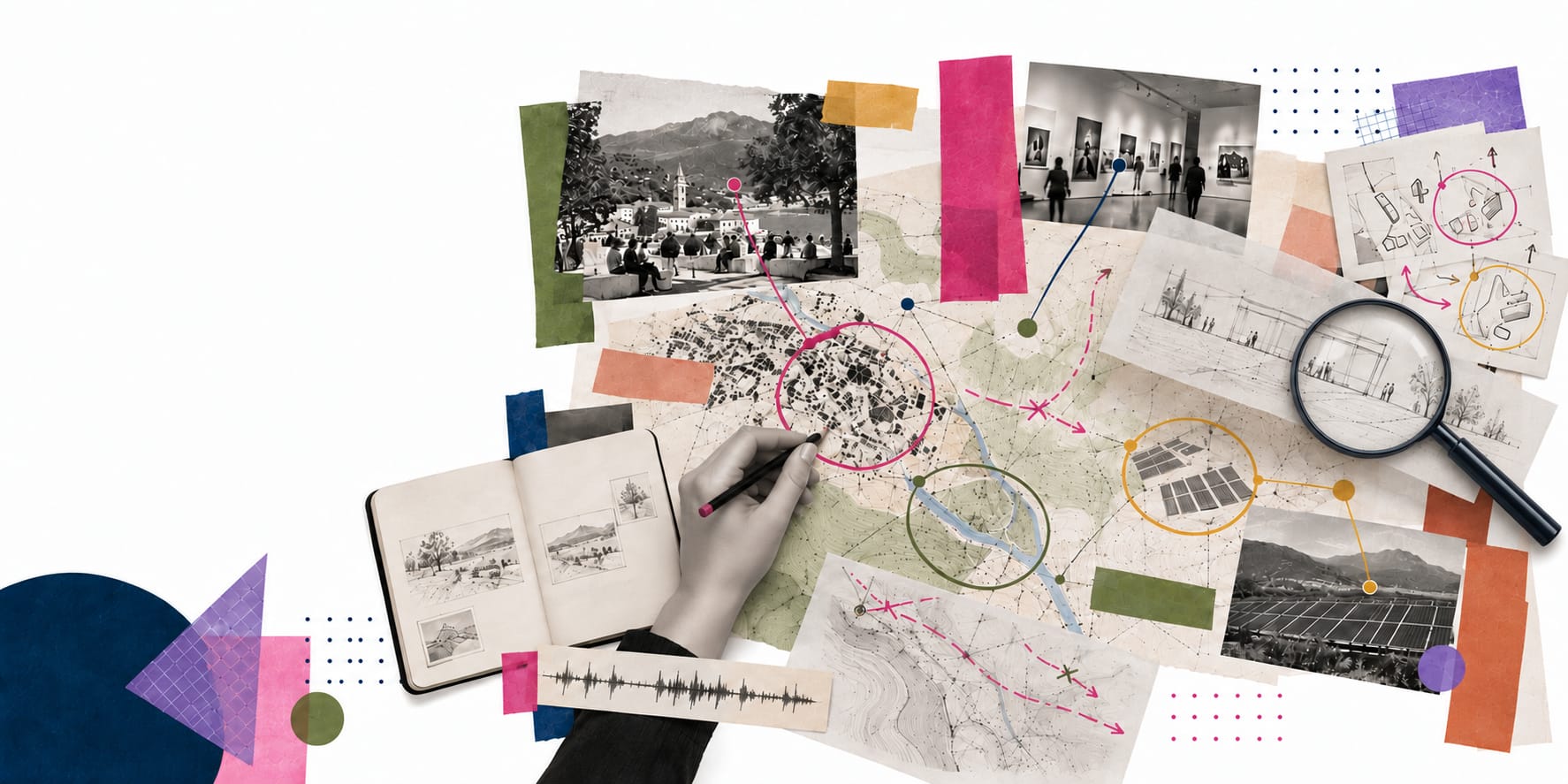
My research and work focus on leveraging energy transitions, urban regeneration, and cultural heritage valorisation to build more equitable, resilient, and inclusive communities. I am committed to applied research that creates measurable public value and a tangible impact on society. By bringing together diverse disciplines, sectors, and stakeholders, I aim to navigate complex territorial challenges and co-create impactful solutions
Overarching Research Question
“How can spatial, energy, and cultural interventions strengthen a territory’s transformative capacity without reproducing dependencies, inequalities, and exclusions?”
My research is driven by this very question: an open issue that guides my work and requires a long-term perspective, combining environmental, social, economic, and cultural lenses. I apply an approach that bridges scientific rigor with a tangible impact on local communities.
Research hypothesis
“Long-lasting territorial transformations are not merely a function of the scale or technical performance of interventions; rather, they stem from their ability to concurrently shape the spatial, infrastructural, social, and cultural relations that organize a given territory.
I develop and test an operational hypothesis: that the integration of spatial planning, energy transitions, and cultural valorisation can generate territories that are more resilient, inclusive, and equipped to face future challenges.
Three Key Areas, One Integrated Research Framework
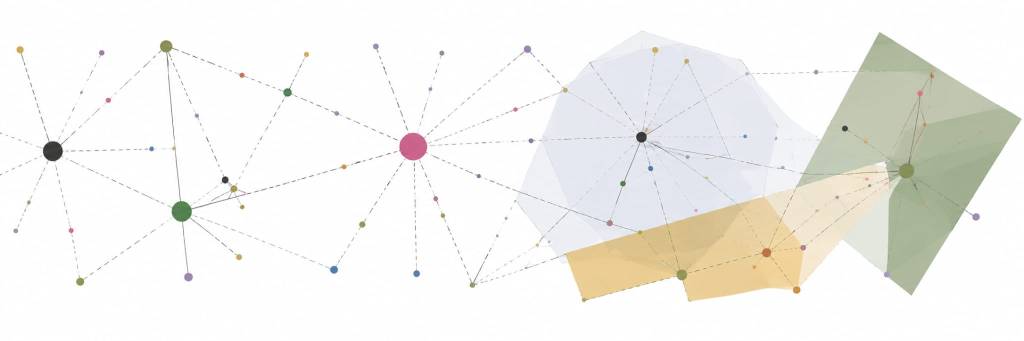
From this central question and hypothesis stem three parallel lines of inquiry, each examining the same process of transformation from a distinct, specialized angle while bound by specific questions and a unified research framework. These are:

Territory
Cities and inland areas as complex systems, where space, environment, and community are interwoven.
Question: ‘Who holds the power to define what constitutes a territorial transformation, and who bears its costs?

Art & Humanities
Cultural heritage as a strategic resource for sustainable development, bridging conservation, innovation, and new forms of engagement and participation.
Question: ‘How far can museums, curation, and artistic practices go in reshaping local social and territorial conditions, and where does this transformative ambition cross into empty rhetoric?’

Energy & Systems
Energy systems as socio-territorial infrastructures: navigating decarbonisation, climate neutrality, and emerging geographies of production.
Question: ‘Is the energy transition reshaping territorial dynamics, or is it reproducing established inequalities under the guise of new technologies?
Methodology
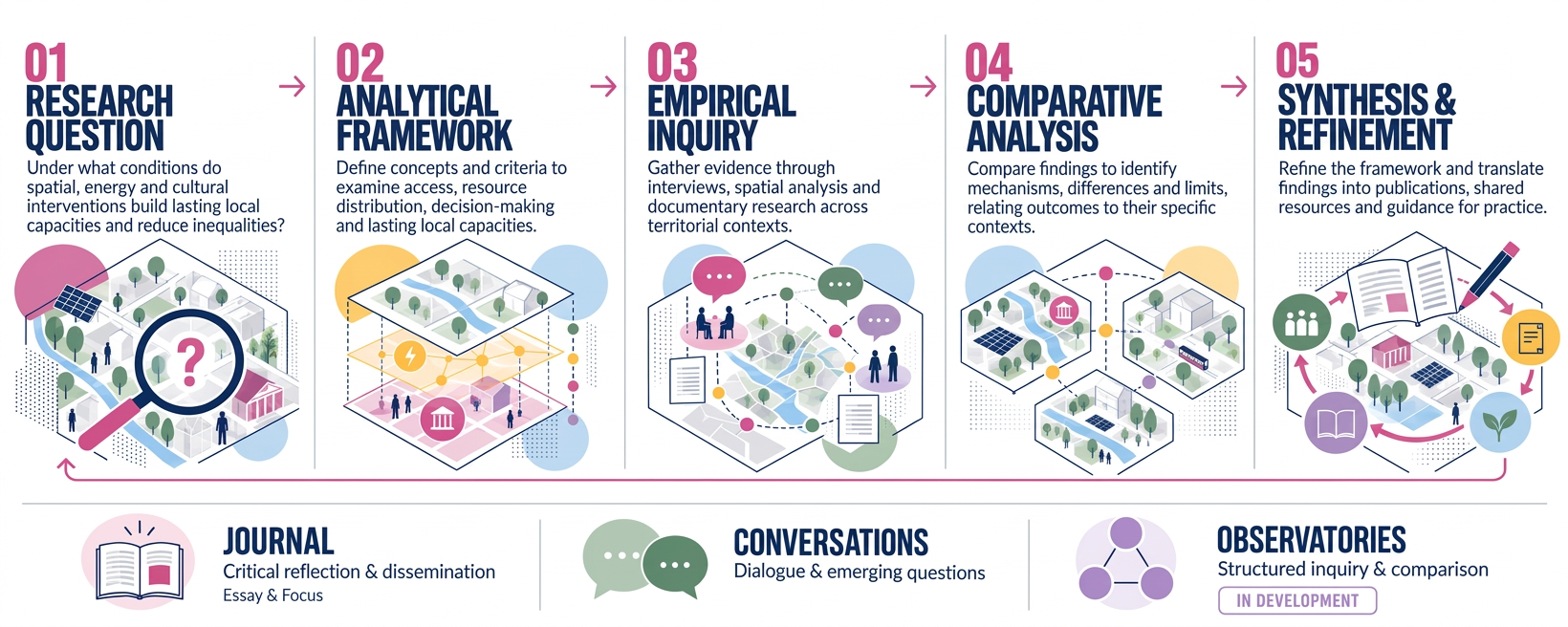
Key Conceptual Pillars
Territorial transformative capacity
Territorial Acupuncture
Territorial Endurance
The ability to support, adapt, and redirect processes of transformation by leveraging resources, relational networks, institutional frameworks, and knowledge systems.
A network of Positive Energy Districts designed to reshape the socio-economic, energy, and environmental relationships between inner territories and metropolitan areas.
A concept under development designed to assess how impacts can be maintained, reinterpreted, or redirected over time.
 Interviews

Coming soon…
Journal

Related Dossiers
TERRITORY
CURATING & ARTISTIC PRACTICES
ENERGY & SYSTEMS
 Project Trajectory and Network
