
 CONVERSATIONS
Dall’attenzione alla capacità culturale
RM, @arts.withnamjoon e le nuove forme della mediazione
Una conversazione su attenzione, fiducia, opere, pubblici e responsabilità istituzionale.
Intervista scritta a cura di Federica Leone · Settembre 2026. Le risposte sono state sottoposte a una revisione editoriale condivisa, finalizzata a migliorarne chiarezza e leggibilità senza modificarne il contenuto sostanziale.
From Attention to Cultural Capability
RM, @arts.withnamjoon, and New Forms of Cultural Mediation
A Conversation on Attention, Trust, Artworks, Audiences, and Institutional Responsibility
Interview curated by Federica Leone · September 2026. The responses were refined through a collaborative editorial process to optimize clarity and legibility while fully preserving the integrity of the original content.
 Context
La fiducia può aprire una soglia verso l’arte. Ma quando l’attenzione diventa conoscenza, e quando rimane soltanto visibilità? A partire dal caso di RM e dall’esperienza di @arts.withnamjoon, Claudia Leone riflette sulle traiettorie attraverso cui può formarsi un pubblico e sulle responsabilità di musei, mediatori e piattaforme. Ne emerge un processo non automatico: sono il contesto, il metodo e la possibilità di costruire un giudizio autonomo a trasformare l’attenzione in capacità culturale.
Trust can open a threshold toward art. But when does attention become true knowledge, and when does it remain mere visibility? Drawing on the case of RM and the experience of @arts.withnamjoon, Claudia Leone reflects on the trajectories through which an audience can take shape, as well as the responsibilities held by museums, mediators, and platforms. What emerges is a far from automatic process: it is context, method, and the opportunity to cultivate autonomous judgment that transform attention into cultural agency.
In questa conversazione
01 Quando l’art influencing diventa mediazione? / When Art Influencing Becomes Cultural Mediation?
02 Come si riconosce la formazione di un pubblico? / How to Recognize the Formation of a Public?
03 Da dove deriva la capacità di orientamento di RM? / Where Does RM’s Capacity for Cultural Orientation Derive From?
04 Chi compie realmente il lavoro di mediazione? / Who Is Truly Performing the Work of Cultural Mediation?
05 Che cosa accade all’opera quando la prima cornice è una figura pubblica? / What Happens to the Artwork When the Initial Frame Is a Public Figure?
06 Che cosa significa autonomia del pubblico? / What Is Meant by Audience Autonomy?
07 Quale lavoro resta invisibile? / Which Work Remains Invisible?
08 Che cosa dovrebbe valutare un museo prima di avviare una collaborazione? / What Should a Museum Evaluate Before Launching a Collaboration?
09 Che cosa cambia quando una capacità di orientamento nata fuori dal museo entra nell’istituzione? / What Changes When a Capacity for Orientation Born Outside the Museum Enters the Institution?
10 Quale evidenza metterebbe in discussione la tesi? / What Evidence Would Challenge the Thesis?
Claudia Leone
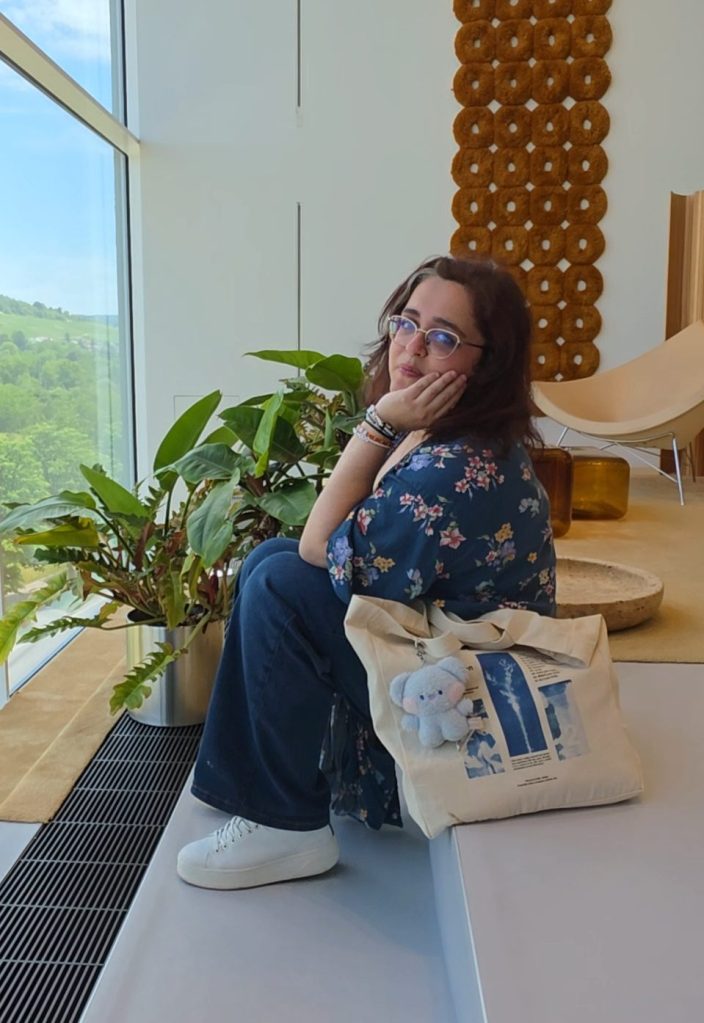
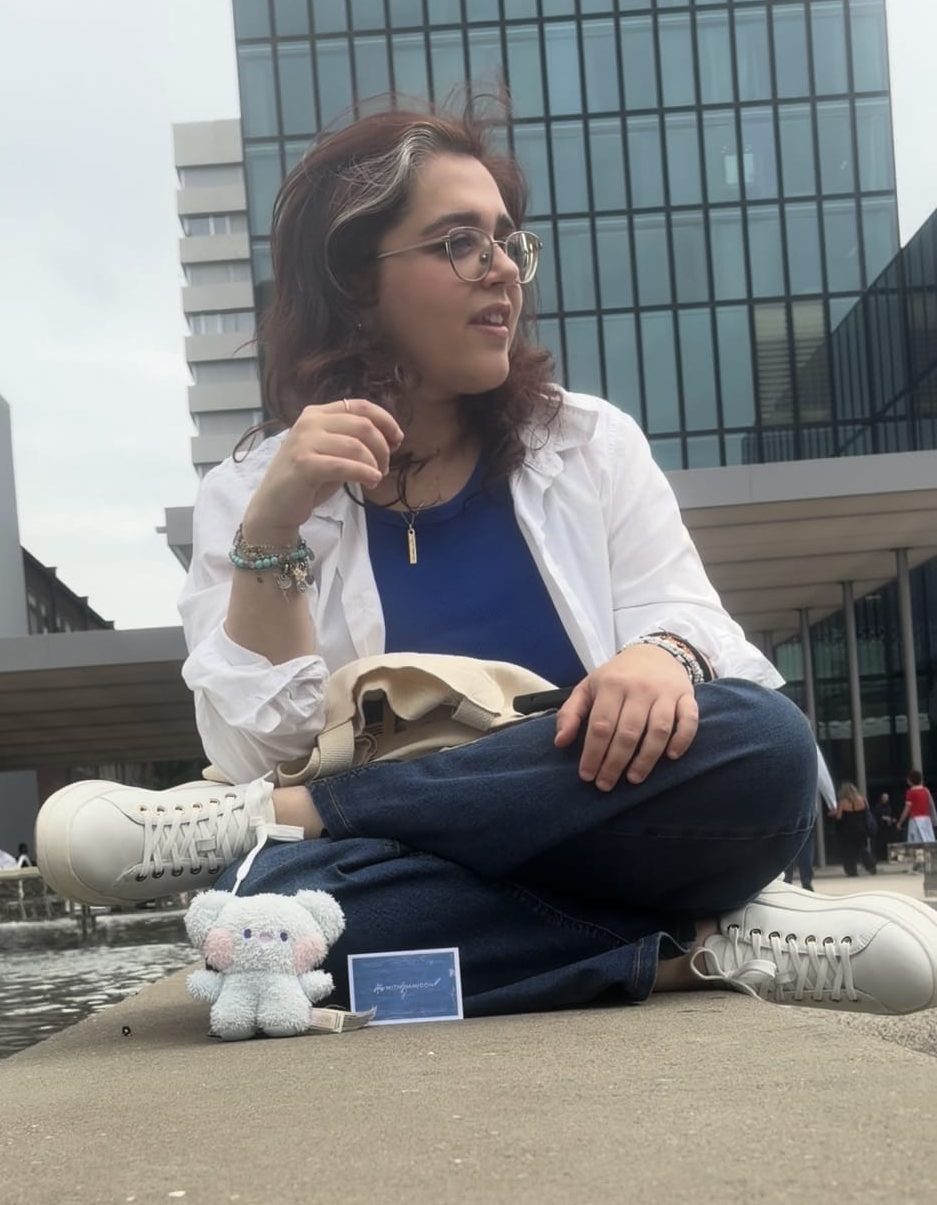
Museologa, divulgatrice specializzata in arte coreana contemporanea e fondatrice di @arts.withnamjoon (2025), Claudia Leone svolge un lavoro di ricerca, verifica, contestualizzazione e mediazione dedicato alle opere, agli artisti e alle istituzioni incontrati attraverso l’interesse di RM per l’arte. Attraverso @arts.withnamjoon osserva come una relazione di fiducia nata fuori dal museo possa aprire modalità di accesso, partecipazione e costruzione autonoma di conoscenza. Con una laurea triennale in Economia Aziendale all’Università di Catania, una magistrale in Economia e gestione delle arti e delle attività culturali presso l’Università di Venezia e un master di secondo livello in Museologia, Museografia e management del patrimonio culturale presso l’Università Cattolica del Sacro Cuore di Milano, la Dott.ssa Leone ha collezionato esperienze lavorative presso l’ADI Museum di Milano, Fondazione Prada e la Fondazione Torino Musei. Con quest’ultima, è stata co-autrice dell’articolo “Ritorno a casa. Il cofano ritrova smalto. Analisi del crowdfunding di Palazzo Madama“, un’analisi sul crowdfunding per il recupero degli smalti del cofano di Guala Bicchieri, usando il fenomeno dell’art influencing incarnato da Alessandro Barbero per comprendere come le figure di riferimento mobilitino la comunità nel fundraising culturale.
A museum professional and independent scholar specializing in Korean contemporary art, Claudia Leone, M.A., is the founder of @arts.withnamjoon (est. 2025). Her research, verification, contextualization, and cultural mediation focus on the artworks, artists, and institutions encountered through RM’s engagement with visual art. Through @arts.withnamjoon, she examines how a relationship of trust cultivated outside traditional museum spaces can foster new modes of access, public participation, and autonomous knowledge building. Holding a Bachelor’s degree in Business Administration from the University of Catania, a Master of Arts in Innovation and Organization of Culture and the Arts from Ca’ Foscari University of Venice, and an Advanced Master (2nd level) in Museology, Museography, and Cultural Heritage Management from the Università Cattolica del Sacro Cuore in Milan, Dr. Leone has accumulated professional experience with the ADI Design Museum in Milan, Fondazione Prada, and Fondazione Torino Musei. With the latter, she co-authored the article “Ritorno a casa. Il cofano ritrova smalto. Analisi del crowdfunding di Palazzo Madama” an analysis of the crowdfunding campaign for the recovery of the Guala Bicchieri coffer’s enamels that examines the phenomenon of art influencing, embodied by Alessandro Barbero, to understand how trusted public figures mobilize communities in cultural fundraising.
ITA
L’incontro con l’arte può iniziare fuori dal museo, attraverso una relazione di fiducia costruita in un altro campo. Ma l’attenzione non coincide automaticamente con la mediazione, così come un aumento della visibilità non implica necessariamente la formazione di un pubblico.
Il caso di RM permette di osservare questa soglia con particolare chiarezza. RM (Kim Namjoon), leader dei BTS, ha costruito negli anni una presenza pubblica legata anche alla frequentazione dei musei, al collezionismo e alla promozione di artisti, in particolare coreani. Le sue visite e le opere che condivide possono attivare un primo interesse. Tra questa esposizione iniziale e una relazione più consapevole con l’arte intervengono però ricerca, contestualizzazione, traduzione, confronto e continuità.
In questa conversazione con Claudia Leone, museologa, divulgatrice specializzata in arte coreana contemporanea e fondatrice di @arts.withnamjoon, indaghiamo ciò che accade lungo questo passaggio: da dove deriva la capacità di orientamento di una figura pubblica, chi compie il lavoro di mediazione, come si riconosce la formazione di un pubblico e quali responsabilità assumono le istituzioni quando l’interesse arriva attraverso percorsi che non hanno direttamente progettato.
ENG
An encounter with art can begin outside the museum, initiated through a relationship of trust built in an entirely different sphere. However, attention does not automatically equate to mediation, just as increased visibility does not inherently imply the formation of an audience.
The case of RM offers an exceptionally clear lens through which to observe this threshold. As the leader of BTS, RM (Kim Namjoon) has over the years cultivated a public presence deeply connected to museum-going, collecting, and the championing of artists, particularly Korean figures. His visits and the works he shares are capable of sparking an initial interest. Yet between this primary exposure and a more conscious engagement with art lie research, contextualization, translation, dialogue, and continuity.
In this conversation with Claudia Leone—museologist, independent scholar specializing in Korean contemporary art and founder of @arts.withnamjoon—we explore what unfolds along this transition: where a public figure’s power to guide attention originates, who actually carries out the work of mediation, how audience development can be identified, and what responsibilities institutions assume when public interest arrives through pathways they did not directly design.
01
Quando l’art influencing diventa mediazione? / When Art Influencing Becomes Cultural Mediation?
Prima di entrare nel caso di RM, come distingueresti l’art influencing dalla promozione, dal celebrity endorsement o dalla condivisione pubblica di un gusto personale? Che cosa deve accadere nella relazione tra pubblico, opera e contesto perché si possa parlare di mediazione culturale? / Before examining the case of RM, how would you distinguish art influencing from marketing, celebrity endorsement, or the public sharing of personal taste? What must occur in the relationship between audience, artwork, and context for genuine cultural mediation to take place?
ITA
Per me, l’art influencing diventa mediazione quando l’attenzione generata da una figura pubblica non si esaurisce nella visibilità dell’opera, ma diventa un’occasione per creare accesso, fornire strumenti e costruire una relazione più consapevole con il contenuto culturale. La differenza rispetto alla promozione, al celebrity endorsement o alla semplice condivisione di un gusto personale sta nella presenza di questo passaggio ulteriore.
Un celebrity endorsement può attirare l’attenzione verso un museo, un artista o un’opera, ma non necessariamente modifica il modo in cui il pubblico entra in relazione con quel contenuto. Parlerei invece di mediazione quando, tra pubblico, opera e contesto, si costruisce una relazione più articolata. La figura pubblica può funzionare come punto di accesso; occorre poi offrire il contesto necessario per andare oltre la semplice esposizione: spiegare chi è l’artista, fornire informazioni sull’opera, proporre chiavi di lettura, mettere in relazione opere e contesti diversi o, anche semplicemente, stimolare il pubblico a porsi nuove domande.
La quantità di attenzione è quindi una condizione possibile, ma non sufficiente. Un grande seguito può portare un’opera davanti a persone che normalmente non la incontrerebbero; la mediazione comincia quando quella visibilità viene trasformata in possibilità di conoscenza e partecipazione.
Nel mio caso, RM rappresenta il punto di partenza di questo processo. Una sua visita a un museo o la condivisione di un’opera può generare curiosità. Il mio lavoro inizia quando utilizzo quella curiosità per accompagnare il pubblico oltre il primo contatto, offrendo informazioni e contesto e lasciando poi a ciascuno lo spazio per costruire una propria interpretazione. I segnali minimi sono, per me, la presenza di un contesto, la volontà di facilitare l’accesso e, soprattutto, la possibilità che il pubblico sviluppi una relazione autonoma con ciò che osserva. Se questi elementi mancano, parlerei più propriamente di art influencing, promozione o condivisione di un interesse personale, a seconda dei casi.
ENG
For me, art influencing transitions into mediation when the attention generated by a public figure does not end with the artwork’s visibility, but becomes an opportunity to create access, provide tools, and build a more conscious relationship with cultural content. The difference compared to marketing, celebrity endorsement, or the simple sharing of personal taste lies precisely in the presence of this further step.
A celebrity endorsement can draw attention toward a museum, an artist, or a work, but it does not necessarily alter how the public engages with that content. By contrast, I would speak of mediation when a more articulated relationship is constructed between audience, artwork, and context. The public figure can act as a point of entry; what must follow is the provision of the context necessary to move beyond mere exposure: explaining who the artist is, providing information about the work, offering interpretative keys, connecting different works and contexts, or even simply encouraging the public to ask new questions.
The volume of attention is thus a potential catalyst, but not a sufficient condition. A massive following can bring an artwork before people who would not normally encounter it; mediation begins when that visibility is transformed into an opportunity for knowledge and participation.
In my case, RM represents the starting point of this process. A visit he makes to a museum or a work he shares can spark curiosity. My work begins when I leverage that curiosity to guide the audience beyond the initial contact, offering information and context, while leaving space for each individual to construct their own interpretation. The baseline indicators are, for me, the presence of context, a commitment to facilitating access, and above all, the possibility for the public to develop an autonomous relationship with what they observe. Where these elements are absent, I would characterize it more accurately as art influencing, marketing, or the sharing of a personal interest, depending on the case.
02
Come si riconosce la formazione di un pubblico? / How to Recognize the Formation of a Public?
Nel lavoro di @artswithnamjoon, quali comportamenti ti fanno pensare che l’interesse si stia trasferendo dalla figura di RM verso opere, artisti e istituzioni? Puoi indicare un caso concreto in cui hai osservato questo passaggio e spiegare su quali materiali, interazioni o osservazioni fondi questa lettura? / In the work of @artswithnamjoon, what behaviors suggest that audience interest is shifting away from RM as a figure and toward the artworks, artists, and institutions themselves? Could you point to a concrete case where you observed this transition and explain the materials, interactions, or observations that ground your reading?
ITA
Nel lavoro di @arts.withnamjoon considero significativo il momento in cui l’interesse inizialmente rivolto a RM comincia a spostarsi verso le opere, gli artisti, i musei e i contenuti culturali dai quali parto. Non misuro questo passaggio soltanto attraverso i numeri, ma soprattutto attraverso la qualità delle interazioni.
Ricevo, per esempio, messaggi da persone che raccontano di aver visitato un museo dopo aver visto un contenuto, cercato autonomamente un artista, iniziato a seguire un’istituzione culturale o approfondito un tema incontrato per la prima volta attraverso il profilo. A volte mi inviano fotografie delle visite o tornano a raccontarmi ciò che hanno scoperto. Considero questi comportamenti più significativi di un like o di una visualizzazione, perché indicano che l’interesse non si è fermato al contenuto pubblicato.
Un caso particolarmente rilevante è il progetto curatoriale che sto realizzando per il compleanno di RM. Ho chiesto alla community di raccontarmi in che modo il suo coinvolgimento nell’arte e nella cultura avesse influenzato il loro rapporto con questi ambiti. Ho ricevuto più di cento risposte. Molte persone non si sono limitate a parlare di RM, ma hanno raccontato di aver iniziato a visitare musei, interessarsi ad artisti, approfondire opere o guardare alla cultura in modo diverso grazie a quella prima esposizione. Sono testimonianze individuali e, da sole, non costituiscono una prova generalizzabile; rappresentano però un materiale qualitativo significativo per osservare queste traiettorie.
Non tutto il pubblico compie lo stesso passaggio. Alcune persone seguono il profilo principalmente per RM e interagiscono soprattutto quando il contenuto lo riguarda direttamente. È normale e ci ricorda che la community non è un pubblico omogeneo. Preferisco quindi parlare di traiettorie differenti di partecipazione: alcuni rimangono prevalentemente follower di un profilo legato a RM; altri diventano lettori interessati ai contenuti culturali; altri ancora iniziano a visitare musei, studiare artisti o partecipare attivamente alle conversazioni. Il mio obiettivo non è che tutti seguano lo stesso percorso, ma creare le condizioni perché possano farlo.
Per distinguere un cambiamento osservabile da una semplice impressione, guardo alla ricorrenza e alla qualità dei comportamenti nel tempo, non al singolo messaggio. Una testimonianza acquista maggiore valore quando si inserisce in un insieme di comportamenti simili e ripetuti, capaci di mostrare il passaggio dall’interesse per RM a un interesse più autonomo verso l’arte e la cultura.
ENG
In the work of @arts.withnamjoon, I find particularly significant those moments when the interest initially directed at RM begins to shift toward the artworks, artists, museums, and cultural content from which I start. I do not measure this transition solely through metrics, but primarily through the quality of the interactions.
For instance, I receive messages from individuals sharing that they visited a museum after coming across a post, independently researched an artist, began following a cultural institution, or delved deeper into a subject encountered for the first time through the account. At times, they send photographs from their visits or return to share what they discovered. I consider these behaviors far more meaningful than a like or a view, because they indicate that engagement did not stop at the published post.
A particularly relevant case is the curatorial project I am developing for RM’s birthday. I asked the community to share how his involvement in art and culture had influenced their own relationship with these fields. I received over one hundred responses. Many people did not limit themselves to speaking about RM; instead, they recounted how they began visiting museums, developing an interest in artists, studying works in depth, or viewing culture through a different lens as a result of that initial exposure. These are individual accounts and do not, on their own, constitute generalizable proof; however, they represent significant qualitative material for observing these trajectories.
Not all members of the audience make the same transition. Some follow the profile primarily for RM and interact mainly when the content concerns him directly. This is natural and serves as a reminder that the community is not a homogeneous audience. Rather than expecting uniformity, I prefer to speak of distinct trajectories of participation: some remain predominantly followers of an account tied to RM; others become readers interested in cultural content; still others begin visiting museums, studying artists, or actively contributing to discussions. My goal is not to ensure that everyone follows the same path, but to create the conditions that make such journeys possible.
To distinguish an observable shift from a mere impression, I look for the recurrence and quality of these behaviors over time, rather than relying on an isolated message. A test statement gains genuine value when it fits into a pattern of similar and repeated behaviors—those that clearly demonstrate the movement from an interest in RM toward a more autonomous engagement with art and culture.
03
Da dove deriva la capacità di orientamento di RM? / Where Does RM’s Capacity for Cultural Orientation Derive From?
RM non incontra il pubblico come storico dell’arte, curatore istituzionale o rappresentante di un museo. La sua capacità di orientare l’attenzione nasce da una relazione di fiducia costruita altrove. Come si trasferisce questa fiducia verso l’arte e quali effetti può produrre sulla disponibilità del pubblico a confrontarsi con opere o artisti poco conosciuti? / RM does not engage the public as an art historian, institutional curator, or museum representative. His ability to direct attention stems from a trust built elsewhere. How does this trust transfer onto art, and what effect can it have on an audience’s willingness to engage with unfamiliar works or artists?
ITA
La capacità di orientamento di RM deriva innanzitutto dalla fiducia costruita con il proprio pubblico in un ambito diverso dall’arte. Le persone non si avvicinano a un’opera perché lo considerano uno storico dell’arte, ma perché riconoscono nella sua curiosità e nel suo modo di guardare qualcosa di credibile e familiare. Questa fiducia può trasferirsi agli oggetti culturali che sceglie di condividere.
Quando RM pubblica un’opera, un museo o un artista, non offre necessariamente una spiegazione specialistica, ma può generare una prima disponibilità all’ascolto. Per chi non avrebbe incontrato autonomamente quell’opera, la relazione di fiducia può abbassare la soglia iniziale di accesso.
È però essenziale distinguere questo processo dalla mediazione specialistica. La fiducia può aprire la porta, ma non sostituisce le competenze necessarie per approfondire ciò che si trova dall’altra parte. RM può essere il punto d’ingresso; la mediazione fornisce gli strumenti per andare oltre la prima curiosità.
Il rischio è che la fiducia nella persona diventi l’unico criterio di valore e che un’opera sia considerata importante soltanto perché condivisa da RM. Cerco quindi di riportare l’attenzione sull’oggetto culturale, offrendo il contesto necessario perché il pubblico sviluppi un giudizio proprio.
La posizione esterna di RM rispetto al sistema specialistico dell’arte può essere una risorsa: presenta l’arte come qualcosa capace di suscitare curiosità anche senza una formazione specifica. La mediazione interviene poi per rendere quel rapporto più consapevole.
ENG
RM’s power to guide attention stems first and foremost from the trust he has built with his audience in a sphere outside of art. People do not approach an artwork because they view him as an art historian, but because they recognize something credible and relatable in his curiosity and way of seeing. This trust can then be transferred onto the cultural objects he chooses to share.
When RM shares an artwork, a museum, or an artist, he does not necessarily provide a specialized explanation, but he can create an initial openness to engage. For those who would not have encountered that work independently, this bond of trust lowers the barrier to entry.
However, it is essential to distinguish this process from expert mediation. Trust can open the door, but it cannot replace the skills and framework required to navigate what lies beyond it. RM can act as the entry point; mediation provides the analytical tools to move beyond that initial spark of curiosity.
The risk is that trust in the individual becomes the sole criterion of value, leading an artwork to be deemed important simply because RM shared it. I therefore seek to redirect attention back to the cultural object itself, offering the context necessary for the public to cultivate their own critical judgment.
RM’s position outside the formal art ecosystem can serve as a distinct asset: it presents art as something capable of inspiring curiosity even without a specialized background. Mediation then steps in to transform that initial connection into a more conscious engagement.
“La fiducia può aprire la porta, ma non sostituisce le competenze necessarie per comprendere ciò che si trova dall’altra parte. / Trust can open the door, but it is no substitute for the critical tools required to navigate what lies on the other side.”
04
Chi compie realmente il lavoro di mediazione? / Who Is Truly Performing the Work of Cultural Mediation?
RM rende visibili opere, artisti e luoghi; @arts.withnamjoon ne ricostruisce riferimenti e contesti; le comunità traducono, archiviano e fanno circolare informazioni; musei e gallerie possono fornire accesso, ulteriori cornici interpretative e legittimazione istituzionale. Questa descrizione corrisponde alla tua esperienza oppure semplifica eccessivamente la distribuzione dei ruoli? Ha ancora senso cercare un unico mediatore o la mediazione emerge dall’interazione tra soggetti diversi? / RM brings artworks, artists, and venues into view; @arts.withnamjoon reconstructs their references and contexts; communities translate, archive, and circulate information; while museums and galleries provide access, broader interpretative frames, and institutional legitimacy. Does this narrative align with your experience, or does it oversimplify the distribution of these roles? Furthermore, does it still make sense to look for a single mediator, or does mediation now emerge from the interplay among diverse actors?
ITA
Soprattutto sulle piattaforme digitali, la mediazione culturale non può essere attribuita a un unico soggetto: nasce dall’interazione tra figure con ruoli e competenze differenti.
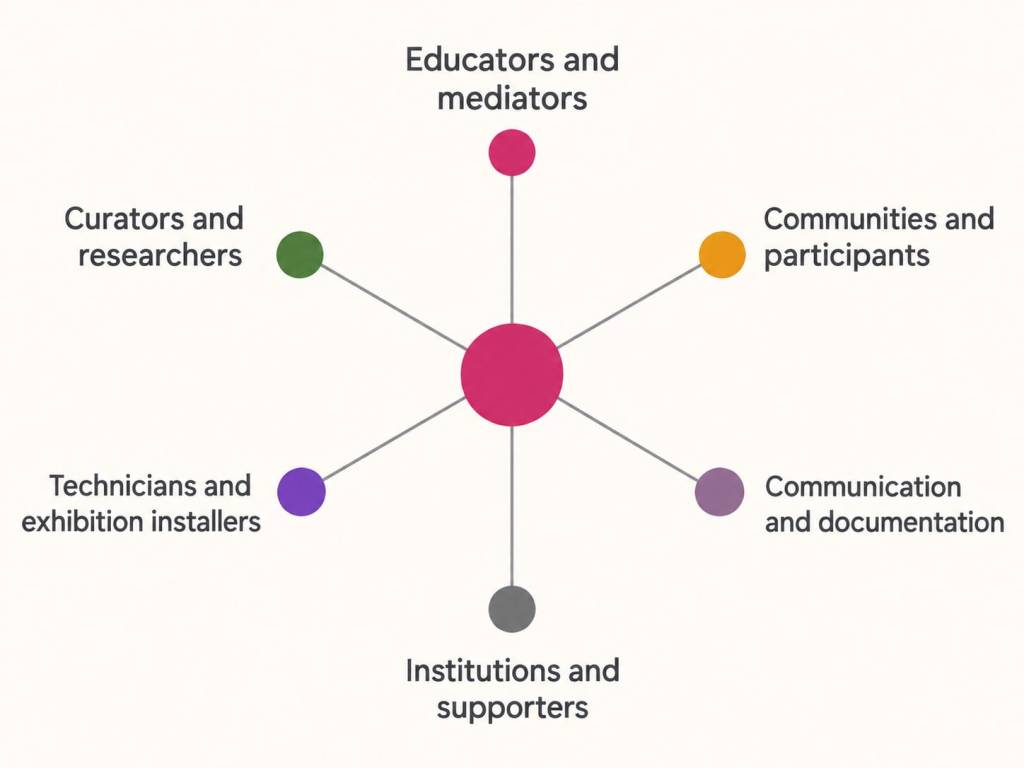
Nel caso di @arts.withnamjoon, RM genera attenzione; io ricostruisco contesti, verifico informazioni e collego ciò che viene condiviso a riferimenti più ampi. La community non è una semplice destinataria: fa domande, condivide risorse, traduce, discute e segnala nuovi contenuti. Anche il pubblico partecipa quindi al processo.
Questo non significa mettere sullo stesso piano ruoli diversi. Musei, curatori e storici dell’arte possiedono competenze e responsabilità specifiche che la circolazione di informazioni sui social non sostituisce. Nel mio lavoro mantengo chiara questa distinzione, utilizzo fonti affidabili e non presento la mia interpretazione come l’unica possibile. @arts.withnamjoon non è quindi una semplice attività di redistribuzione di informazioni. La mediazione avviene quando i materiali vengono selezionati, contestualizzati e organizzati per un pubblico preciso, rendendoli accessibili senza cancellarne la complessità.
Anche Instagram condiziona il processo: determina ciò che viene visto, la velocità con cui circola e il formato attraverso cui viene recepito. La mediazione digitale non avviene in uno spazio neutro; richiede di adattare contenuti complessi a formati brevi e visivi senza sacrificare il contesto all’attenzione.
La mediazione prende dunque forma nell’interazione tra la capacità di RM di orientare l’attenzione, il mio lavoro di ricerca, la partecipazione della community, il ruolo delle istituzioni e le caratteristiche della piattaforma.
ENG
In digital spaces especially, cultural mediation cannot be attributed to a single actor; rather, it emerges from the interaction among individuals with distinct roles and domains of expertise.
In the case of @arts.withnamjoon, RM generates the initial focus; I reconstruct contexts, verify sources, and connect what is shared to broader frameworks. The community itself is far from a passive audience: members ask questions, share resources, translate, discuss, and bring new content to light. Thus, the public actively participates in the process as well.
This does not mean conflating these different roles. Museums, curators, and art historians possess specialized expertise and structural responsibilities that the circulation of information on social media cannot replace. In my work, I maintain a clear boundary, relying on authoritative sources and refraining from presenting my interpretation as definitive. Consequently, @arts.withnamjoon is not merely an exercise in redistributing information. True mediation occurs when materials are curated, contextualized, and structured for a specific audience—rendering them accessible without stripping away their inherent complexity.
Furthermore, Instagram conditions this entire process: it governs visibility, the speed of circulation, and the formats through which content is consumed. Digital mediation does not unfold in a neutral space; it requires adapting complex narratives into concise, visual formats without sacrificing intellectual rigor for short-term engagement.
Mediation ultimately takes shape through the interplay among RM’s ability to direct attention, my research and editorial work, the community’s active participation, the institutional framework, and the structural dynamics of the platform itself.
05
Che cosa accade all’opera quando la prima cornice è una figura pubblica? / What Happens to the Artwork When the Initial Frame Is a Public Figure?
Quando un’opera viene incontrata perché RM l’ha visitata, scelta o collezionata, la sua figura può entrare nella ricezione dell’opera. Questa cornice apre nuove possibilità di lettura oppure rischia di trasformare l’opera in un frammento della sua biografia pubblica? / “When an artwork is encountered simply because RM visited, chose, or collected it, his persona inevitably enters the work’s reception. Does this framing unlock new interpretative possibilities, or does it risk reducing the artwork to a mere fragment of his public biography?
ITA
Quando un’opera viene incontrata attraverso RM, la sua figura entra inevitabilmente nella cornice iniziale. Non significa però che l’opera debba rimanervi legata: RM può essere una soglia di accesso, ma non la chiave definitiva di lettura.
Se una persona arriva a un artista perché RM ne ha visitato o condiviso l’opera, quella relazione può attivare curiosità. Da lì è importante riportare l’attenzione sull’artista, sull’opera, sul contesto e sulle diverse possibilità interpretative. Per questo non costruisco i contenuti soltanto intorno alla domanda «Perché RM ha scelto quest’opera?», ma provo a chiedere che cosa possiamo scoprirvi indipendentemente da lui.
La figura pubblica può ampliare la visibilità senza appropriarsi del significato dell’opera, ma il rischio cresce quando la sua notorietà supera ampiamente quella dell’artista. Se l’interesse si ferma alla relazione tra i due, l’artista diventa «quello che piace a RM». Se invece conduce a conoscerne il lavoro e a coltivare un interesse autonomo, la visibilità produce un effetto diverso.
Reputazione, mercato e mediazione possono intrecciarsi, ma non coincidono. Una maggiore visibilità può incidere sulla reputazione di un artista e, talvolta, sul valore commerciale; il mio interesse è però osservare quando l’esposizione produce curiosità, conoscenza e accesso. La visibilità è un dato; la conoscenza è un processo; le conseguenze reputazionali o commerciali richiedono altri elementi per essere valutate.
ENG
When an artwork is encountered through RM, his persona inevitably enters the initial framing. However, this does not mean the artwork must remain tied to him: RM can serve as an threshold of entry, but not the definitive key to interpretation.
If someone comes across an artist because RM visited an exhibition or shared a work, that connection can ignite curiosity. From that point forward, it is essential to redirect attention toward the artist, the artwork, the context, and the range of interpretative possibilities. For this reason, I do not structure content solely around the question, “Why did RM choose this work?” Instead, I attempt to ask what we can uncover within it independently of him.
A public figure can expand an artwork’s visibility without appropriating its meaning; however, the risk intensifies when their notoriety vastly outweighs that of the artist. If public interest stops short at the link between the two, the artist is reduced to “the one RM likes.” If, on the other hand, it leads to exploring the artist’s broader body of work and cultivating an autonomous interest, that visibility produces an entirely different effect.
Reputation, market dynamics, and mediation may intersect, but they do not coincide. Greater visibility can certainly influence an artist’s reputation and, at times, their commercial value; my primary focus, however, is to observe when exposure yields curiosity, knowledge, and critical access. Visibility is a given metric; knowledge is an ongoing process; and reputational or commercial ramifications require different analytical tools to be fully evaluated.
06
Che cosa significa autonomia del pubblico? / What Is Meant by Audience Autonomy?
Un pubblico diventa autonomo soltanto quando non ha più bisogno della figura che ha attivato il primo interesse? Oppure può sviluppare competenze e capacità critica continuando a riconoscersi nella comunità nata intorno a RM? / Does an audience achieve autonomy only when it no longer depends on the figure that first sparked its interest? Or can it develop critical agency and expertise while continuing to identify with the community formed around RM?
ITA
L’autonomia non coincide con la perdita di interesse per RM. Riguarda ciò che il pubblico riesce a fare con l’interesse inizialmente attivato.
Cercare informazioni, visitare un museo, approfondire un artista, ampliare i propri interessi o sviluppare un’opinione sono già segnali di autonomia. Lo è ancora di più la capacità di formulare domande, confrontare interpretazioni e dissentire.
L’appartenenza a una community può sostenere l’autonomia, se non impone un’interpretazione comune e permette il confronto. RM può restare una figura significativa, ma la mediazione non dovrebbe creare dipendenza dalle sue scelte: dovrebbe consentire alla curiosità di proseguire oltre il singolo contenuto e, idealmente, oltre chi l’ha generata.
Un segnale interessante è il cambiamento delle domande: non più soltanto «Che cosa ha visto RM?», ma «Conosci questo artista?», «Hai mai parlato di questo museo?», «Che cosa pensi di quest’opera?». In quel momento le persone iniziano a costruire un percorso proprio.
Vedo quindi l’autonomia come la capacità di muoversi nella cultura con curiosità, consapevolezza e libertà di giudizio, anche restando parte della community.
ENG
Autonomy does not equate to a loss of interest in RM. Rather, it concerns what the audience is able to do with the initial interest he activated.
Seeking out information, visiting a museum, researching an artist, broadening one’s horizons, or developing an independent opinion are all clear signals of autonomy. Even more telling is the capacity to formulate original questions, compare interpretations, and express disagreement.
Belonging to a community can actively support autonomy, provided it does not impose a single, uniform reading and instead encourages critical dialogue. RM can remain a meaningful reference point, but effective mediation should avoid creating reliance on his choices: it ought to empower curiosity to extend beyond a single post and, ideally, beyond the figure who initially sparked it.
A particularly telling indicator is a shift in the nature of the questions being asked, moving away from merely, “What did RM see?” toward queries like, “Do you know this artist?”, “Have you ever covered this museum?”, or “What is your perspective on this work?” It is at that precise moment that individuals begin to forge their own paths.
I therefore view autonomy as the capacity to navigate culture with curiosity, critical awareness, and freedom of judgment, even while remaining an active member of the community.
“L’autonomia riguarda ciò che il pubblico riesce a fare con l’interesse inizialmente attivato. / Autonomy resides in what the public is able to do with the interest initially sparked.”
07
Quale lavoro resta invisibile? / Which Work Remains Invisible?
Contestualizzare le opere, verificare fonti, tradurre materiali, costruire archivi, rispondere alle domande e moderare discussioni richiede tempo e competenze. Come viene riconosciuto questo lavoro all’interno delle comunità e nel rapporto con le istituzioni? Quali competenze museologiche entrano concretamente nel lavoro di @arts.withnamjoon? / Contextualizing artworks, verifying sources, translating materials, building archives, answering inquiries, and moderating discussions require significant time and expertise. How is this labor recognized within fan communities and in relation to cultural institutions? Furthermore, what specific museological skill sets actively inform the work of @arts.withnamjoon?
ITA
Il rischio che il lavoro di mediazione rimanga invisibile è concreto, soprattutto sui social, dove il pubblico vede principalmente il contenuto finale. Dietro un post apparentemente semplice possono esserci ricerca, verifica delle fonti, selezione delle informazioni, traduzione, confronto tra materiali e costruzione di una narrazione destinata a un pubblico specifico.
Nel mio caso, le competenze museologiche entrano soprattutto nel modo in cui penso il rapporto tra pubblico, contenuto e istituzione. La formazione in museologia mi ha insegnato a considerare non soltanto l’oggetto culturale, ma anche il modo in cui viene presentato, interpretato e reso accessibile a pubblici diversi. Quando preparo un contenuto, non mi limito quindi a cercare informazioni sull’opera: mi chiedo quali siano davvero utili per quel pubblico, quale contesto sia necessario per comprenderla, come evitare semplificazioni e come lasciare spazio all’interpretazione personale.
Anche la verifica delle fonti e la distinzione tra informazione e interpretazione sono fondamentali. Il fatto che un contenuto venga pubblicato su Instagram non significa che gli standard di accuratezza debbano essere inferiori a quelli utilizzati in altri contesti di divulgazione culturale.
Nel rapporto con le istituzioni vedo un’opportunità, ma anche la necessità di riconoscere il lavoro delle community. Un museo potrebbe entrare in dialogo con queste realtà non soltanto per raggiungere un pubblico o ottenere visibilità, ma riconoscendole come interlocutrici capaci di produrre conoscenza, facilitare l’accesso e intercettare bisogni che l’istituzione potrebbe non vedere direttamente.
Questo richiede reciprocità. Se una community produce ricerca, traduzioni, archivi o contenuti che contribuiscono alla circolazione del patrimonio culturale, non dovrebbe essere considerata una risorsa gratuita per la comunicazione istituzionale. Una collaborazione efficace dovrebbe prevedere riconoscimento, trasparenza dei ruoli e, quando appropriato, forme concrete di collaborazione e valorizzazione del lavoro svolto.
Una delle questioni che sto cercando di comprendere attraverso @arts.withnamjoon è proprio dove finisca la divulgazione amatoriale e dove inizi una pratica di mediazione culturale che richiede competenze, metodo e responsabilità. Il fatto che il mio lavoro sia nato su una piattaforma social non ne determina automaticamente il livello professionale: sono il metodo e la responsabilità con cui tratto i contenuti culturali a definirlo.
ENG
The risk of mediation work remaining invisible is very real, particularly on social platforms where the audience primarily sees only the final output. Behind a seemingly straightforward post lie research, source verification, information selection, translation, cross-referencing of materials, and the crafting of a narrative tailored to a specific audience.
In my case, museological expertise comes into play above all in how I conceptualize the relationship between audience, content, and institution. My training in museology taught me to consider not only the cultural object itself, but also the way it is presented, interpreted, and rendered accessible to diverse publics. When I prepare a piece of content, I do not simply gather facts about the artwork; I ask myself which details are genuinely meaningful for that audience, what context is necessary to grasp it, how to avoid oversimplification, and how to leave room for individual interpretation.
Fact-checking and maintaining a clear distinction between objective information and subjective interpretation are equally fundamental. The fact that content is published on Instagram does not mean accuracy standards should be lower than those applied in other cultural dissemination contexts.
In working with institutions, I see an opportunity, but also the need to formally acknowledge the labor performed by communities. A museum could engage in dialogue with these entities not merely to expand its reach or gain visibility, but by recognizing them as valid interlocutors capable of producing knowledge, facilitating access, and identifying needs the institution itself might overlook.
This demands reciprocity. If a community produces research, translations, archives, or content that actively foster the circulation of cultural heritage, it should not be treated as a free resource for institutional marketing. An effective collaboration requires recognition, transparent boundaries, and, where appropriate, concrete forms of partnership that value the work performed.
One of the central questions I am striving to understand through @arts.withnamjoon is precisely where amateur outreach ends and a practice of cultural mediation—one that demands expertise, methodology, and accountability—begins. The fact that my work originated on a social platform does not automatically dictate its professional standing; rather, it is defined by the methodology and sense of responsibility with which I engage cultural content.
08
Che cosa dovrebbe valutare un museo prima di avviare una collaborazione? / What Should a Museum Evaluate Before Launching a Collaboration?
Prima di collaborare con una figura pubblica o con la comunità che si forma attorno a essa, quali domande dovrebbe porsi un’istituzione riguardo alla propria missione, agli artisti coinvolti, ai pubblici che intende raggiungere e ai risultati culturali che desidera produrre? / Prior to collaborating with a public figure or the community coalescing around them, what questions should an institution ask itself concerning its mission, the artists involved, the audiences it aims to reach, and the cultural outcomes it seeks to generate?
ITA
La prima domanda dovrebbe essere perché si desidera avviare quella collaborazione e quale obiettivo culturale si vuole raggiungere. Il numero di persone che una figura pubblica può coinvolgere è certamente rilevante, ma non dovrebbe essere il punto di partenza né l’unico criterio di valutazione.
Un’istituzione dovrebbe chiedersi se la collaborazione sia coerente con la propria missione, con gli artisti e le opere coinvolte e con i pubblici che intende raggiungere. Soprattutto, dovrebbe chiarire che cosa vuole produrre oltre alla visibilità: nuove occasioni di accesso? Maggiore conoscenza di un artista? Un rapporto più duraturo con persone che normalmente non frequentano il museo? Nuove modalità di interpretazione e partecipazione?
È questo, per me, a distinguere una collaborazione culturalmente motivata da un semplice scambio di capitale reputazionale. Se il museo offre la propria autorevolezza e la figura pubblica porta il proprio seguito, il rischio è che l’operazione si riduca a visibilità reciproca. Se invece entrambe le parti contribuiscono a costruire un’esperienza o un contenuto che produce valore culturale per il pubblico, la collaborazione assume un significato diverso.
Responsabilità e aspettative dovrebbero inoltre essere definite prima dell’inizio del progetto: chi si occupa dei contenuti? Chi verifica le informazioni? Qual è il ruolo della figura pubblica? Quale libertà interpretativa viene lasciata? Come verrà valutato il risultato? Non soltanto attraverso visualizzazioni e follower, ma anche, quando misurabili, attraverso indicatori di partecipazione, accesso, apprendimento o continuità della relazione con il pubblico.
Infine, considero fondamentale il ruolo degli artisti. Non dovrebbero diventare semplicemente il contenuto attraverso cui costruire una collaborazione tra museo e celebrity. La loro voce, il loro lavoro e le loro esigenze devono essere considerati nella progettazione, soprattutto quando la collaborazione può influenzare il modo in cui l’opera viene presentata o percepita.
Prima di chiedersi «Quante persone possiamo raggiungere?», un museo dovrebbe quindi domandarsi: «Perché vogliamo raggiungerle e quale relazione culturale vogliamo costruire con loro?». È questa la differenza tra utilizzare un pubblico e lavorare realmente con un pubblico.
ENG
The first question should address why the institution wishes to initiate that collaboration and what cultural goal it seeks to achieve. The volume of people a public figure can engage is certainly relevant, but it should neither be the starting point nor the sole criterion for evaluation.
An institution ought to ask itself whether the collaboration is aligned with its mission, with the artists and artworks involved, and with the audiences it intends to reach. Above all, it should clarify what it aims to generate beyond mere visibility: new avenues of access? Deeper knowledge of an artist? A more lasting relationship with individuals who do not typically visit museums? New modes of interpretation and participation?
To me, this is precisely what distinguishes a culturally grounded collaboration from a straightforward exchange of reputational capital. If the museum lends its authority while the public figure provides their following, the initiative risks being reduced to mutual visibility. If, however, both parties contribute to constructing an experience or content that yields cultural value for the public, the collaboration assumes a fundamentally different significance.
Responsibilities and expectations should also be defined prior to launch: who takes charge of the content? Who fact-checks the information? What is the specific role of the public figure? What degree of interpretative freedom is permitted? How will the outcomes be evaluated, not merely through views and followers, but also through indicators of participation, access, learning, or audience retention, where measurable?
Finally, I view the role of the artists as fundamental. They should not be reduced to mere content around which a museum and a celebrity build a partnership. Their voice, body of work, and needs must be integral to the project’s design, especially when the collaboration has the potential to influence how their work is framed or perceived.
Before asking ‘How many people can we reach?’, a museum should therefore ask: ‘Why do we want to reach them, and what cultural relationship do we intend to build with them?’ This marks the difference between simply leveraging an audience and genuinely working with one.
“Prima di chiedersi quante persone possiamo raggiungere, un museo dovrebbe domandarsi quale relazione culturale vuole costruire con loro. / Before asking how many people it can reach, a museum ought to question what kind of cultural relationship it intends to build with them.”
09
Che cosa cambia quando una capacità di orientamento nata fuori dal museo entra nell’istituzione? / What Changes When a Capacity for Orientation Born Outside the Museum Enters the Institution?
Con il passaggio di RM da visitatore e orientatore informale a co-curatore, una capacità di selezione e orientamento nata fuori dall’istituzione entra nel suo dispositivo ufficiale. Quali possibilità e quali tensioni apre questo cambiamento di posizione? / With RM’s transition from an informal visitor and trendsetter to a co-curator, a capacity for selection and guidance born outside the institution enters its official apparatus. What opportunities and tensions are opened up by this shift in position?
ITA
Il passaggio da una forma di orientamento informale a un ruolo interno all’istituzione cambia innanzitutto la posizione da cui quella voce interviene. Quando RM visita un museo o condivide un’opera, la sua capacità di orientare l’attenzione nasce soprattutto dalla fiducia costruita con il proprio pubblico. Quando entra nel processo curatoriale di un’istituzione, questa capacità si confronta con procedure, responsabilità e competenze professionali specifiche.
Un esempio è RM × SFMOMA: Between You and Me, la mostra in programma al San Francisco Museum of Modern Art dal 3 ottobre 2026 al 7 febbraio 2027, co-curata da RM con América Castillo e Hyoeun Kim di SFMOMA. Il progetto metterà in dialogo quasi duecento opere della collezione personale di RM e della collezione del museo. È un caso significativo, ma non un modello applicabile automaticamente a ogni collaborazione tra una figura pubblica e un’istituzione.
Il museo può apprendere molto dall’incontro con forme di orientamento sviluppate fuori dal sistema dell’arte. Una figura come RM può portare una prospettiva, una sensibilità e una relazione con il pubblico che l’istituzione non possiede necessariamente, contribuendo a intercettare persone che normalmente non entrerebbero in rapporto con il museo.
Al tempo stesso, la notorietà non coincide con la competenza curatoriale, così come la capacità di raggiungere un grande pubblico non sostituisce le competenze scientifiche dell’istituzione. Una collaborazione significativa dovrebbe mettere in dialogo queste competenze, non stabilire quale debba sostituire l’altra.
Non vedo quindi la co-curatela come un trasferimento automatico dell’autorità dal museo alla figura pubblica, ma come una possibile negoziazione tra forme diverse di conoscenza e autorevolezza. La figura esterna può contribuire con il proprio punto di vista e con la relazione costruita con il pubblico; l’istituzione conserva le responsabilità scientifiche e professionali che le sono proprie.
Questo diventa particolarmente importante quando si lavora con artisti e patrimoni provenienti da contesti diversi da quello dell’istituzione. In questi casi, la collaborazione dovrebbe favorire una traduzione reciproca, evitando che opere e genealogie vengano interpretate soltanto attraverso categorie già consolidate nel contesto occidentale.
ENG
The transition from informal guidance to an institutional role fundamentally alters the position from which a voice operates. When RM visits a museum or shares an artwork, his capacity to direct attention stems primarily from the trust built with his audience. When he enters an institution’s curatorial framework, that same influence must engage with formal procedures, institutional accountabilities, and specialized professional expertise.
A prominent example is RM × SFMOMA: Between You and Me, the exhibition scheduled at the San Francisco Museum of Modern Art from October 3, 2026, to February 7, 2027, co-curated by RM alongside SFMOMA’s América Castillo and Hyoeun Kim. The project brings nearly two hundred works from RM’s personal collection into dialogue with the museum’s permanent holdings. While it stands as a landmark case, it is not a template that can be automatically applied to every collaboration between a public figure and a cultural institution.
An institution can learn a great deal from engaging with modes of curation developed outside the traditional art system. A figure like RM brings a distinct perspective, a refined sensibility, and a connection with the public that museums do not naturally possess, thereby helping to engage audiences who might not otherwise build a relationship with the institution.
At the same time, fame is not synonymous with curatorial expertise, just as the ability to reach a massive audience cannot replace an institution’s scholarly rigor. A meaningful collaboration should create a dialogue between these distinct strengths rather than allowing one to supplant the other.
I do not view co-curation as an automatic transfer of authority from the museum to the public figure, but rather as a nuanced negotiation between different forms of knowledge and legitimacy. The external figure contributes a unique vantage point and an established bond with the audience; the institution retains its inherent scientific, historical, and professional responsibilities.
This distinction becomes critical when working with artists and heritage from cultural contexts distinct from that of the host institution. In such instances, the collaboration should foster a process of mutual translation, ensuring that artworks and their artistic genealogies are not framed solely through pre-existing, Western-centric categories.
10
Quale evidenza metterebbe in discussione la tesi? / What Evidence Would Challenge the Thesis?
Quale osservazione ti porterebbe a concludere che, in un determinato caso, l’art influencing non abbia costruito conoscenza o pubblico, ma abbia soltanto spostato temporaneamente l’attenzione? / What observation would lead you to conclude that, in a given instance, art influencing failed to build knowledge or cultivate an audience, and instead merely redirected attention on a temporary basis?
ITA
L’elemento che metterebbe maggiormente in discussione la tesi sarebbe osservare che l’interesse generato da RM rimane sistematicamente legato alla sua figura e non produce alcuna forma di approfondimento autonomo. Se, dopo aver incontrato un’opera attraverso RM, il pubblico si limitasse a reagire alla sua presenza senza mostrare interesse per l’artista, l’opera o il contesto culturale, parlerei più correttamente di trasferimento temporaneo dell’attenzione che di mediazione o formazione di pubblico.
Anche la durata è importante. Un picco di visualizzazioni, commenti o visite a una mostra può dimostrare che una figura pubblica è stata efficace nell’attivare attenzione, ma non che quell’attenzione si sia trasformata in conoscenza o in una relazione duratura con l’arte. Per sostenere questa interpretazione cercherei segnali successivi: ricerca autonoma, ritorno ai contenuti, visite ad altre istituzioni, interesse verso artisti diversi, capacità di formulare domande e opinioni proprie.
Nel lavoro di @arts.withnamjoon ho incontrato entrambe le situazioni. Alcuni contenuti generano una forte risposta immediata perché riguardano direttamente RM, ma l’interesse per l’opera rimane più limitato. Questo mi ha resa più cauta nel leggere engagement e visibilità come indicatori di mediazione: una grande quantità di attenzione non implica necessariamente che sia avvenuto un processo culturale significativo.
Anche la mia posizione è cambiata. All’inizio tendevo forse a considerare il passaggio da RM all’arte come un processo più lineare: RM suscita interesse, il pubblico incontra un’opera e da lì sviluppa una curiosità autonoma. L’esperienza concreta mi ha mostrato che questo passaggio non è automatico né uguale per tutti. Alcune persone compiono quel percorso; altre rimangono principalmente interessate a RM; altre ancora si muovono avanti e indietro tra i due livelli. Oggi parlerei quindi meno di trasferimento dell’interesse e più di una serie di traiettorie possibili: brevi, durature, intermittenti o, in alcuni casi, inesistenti.
L’aspetto ancora insufficientemente osservato è ciò che accade nel lungo periodo. Instagram consente di leggere abbastanza bene la fase iniziale dell’attenzione e alcune forme di interazione, ma è molto più difficile sapere se chi oggi scopre un artista continuerà a interessarsene tra sei mesi o due anni, o se quell’esperienza avrà modificato stabilmente il suo rapporto con i musei e la cultura. Il limite attuale della mia ricerca è proprio la possibilità di seguire le traiettorie del pubblico oltre la piattaforma e oltre il singolo contenuto; ed è anche uno degli aspetti che considero più interessanti da approfondire.
ENG
The primary evidence that would fundamentally challenge the thesis would be observing that the interest generated by RM remains systematically tied to his persona, failing to produce any form of autonomous inquiry. If, after encountering an artwork through RM, the audience merely reacts to his presence without displaying curiosity about the artist, the piece, or the broader cultural context, I would classify it as a temporary redirection of attention rather than cultural mediation or audience development.
Duration is equally crucial. A surge in views, comments, or exhibition attendance demonstrates that a public figure successfully mobilized attention, but not that such attention evolved into sustained knowledge or a lasting engagement with art. To support the thesis, I look for subsequent indicators: independent research, re-engagement with content, visits to other institutions, curiosity toward different artists, and the capacity to formulate original questions and critical viewpoints.
In my work with @arts.withnamjoon, I have observed both dynamics. Certain posts spark an intense immediate response simply because they feature RM, yet interest in the artwork itself remains constrained. This realization made me more cautious in treating engagement metrics and visibility as proof of mediation: a high volume of attention does not inherently signify that a meaningful cultural process has occurred.
My own perspective has evolved as well. Initially, I tended to view the transition from RM to art as a relatively linear sequence: RM sparks interest, the public encounters an artwork, and from there develops independent curiosity. Practical experience revealed that this shift is neither automatic nor uniform. Some individuals follow that trajectory; others remain focused primarily on RM; still others move back and forth between both levels. Today, I frame it less as a direct transfer of interest and more as a spectrum of potential trajectories—brief, enduring, intermittent, or, in some cases, nonexistent.
What remains insufficiently observed is the long-term impact. While Instagram offers clear visibility into initial attention and immediate interactions, tracking whether someone who discovers an artist today continues to follow them in six months or two years—or whether that experience permanently shifts their relationship with museums—presents a far greater challenge. The current limitation of my research lies precisely in tracing audience trajectories beyond the platform and beyond individual posts; it is also one of the areas I find most compelling for future study.
CONCLUSIONI
a) Quale cambiamento dovrebbe restare? / Which of these changes should be here to stay?
Quando il picco di attenzione è terminato, quale cambiamento osservabile dovrebbe restare nel pubblico, nell’istituzione o nel rapporto con le opere perché si possa dire che non si è trattato soltanto di visibilità? / Once the surge of attention subsides, what observable shift must remain—within the audience, the institution, or the engagement with the artworks themselves—to claim that it was more than mere visibility?
ITA
Per me, dopo il picco di attenzione dovrebbe rimanere una relazione capace di continuare oltre la figura che ha generato il primo interesse. Non necessariamente un aumento numerico del pubblico, ma la possibilità che quella prima esposizione abbia prodotto curiosità, conoscenza e una maggiore disponibilità a confrontarsi autonomamente con le opere e con le istituzioni.
Il segnale più significativo sarebbe osservare che, terminata l’attenzione iniziale, alcune persone continuano a cercare informazioni, visitare musei, scoprire artisti, tornare sui contenuti o sviluppare interpretazioni proprie. Anche per le istituzioni il cambiamento dovrebbe superare il numero di visitatori raggiunti in occasione di un singolo evento e tradursi, quando possibile, in una relazione più duratura con pubblici che prima erano meno vicini al museo.
Il principio che non dovrebbe essere sacrificato, neppure in cambio di una visibilità eccezionale, è la qualità della mediazione. Per raggiungere un pubblico più ampio non è necessario semplificare un’opera fino a svuotarla del suo contesto, né utilizzare una figura pubblica come unico elemento attraverso cui renderla interessante. La visibilità ha valore quando diventa un punto di accesso, non quando costituisce il fine ultimo.
La domanda che forse le istituzioni dovrebbero porsi più spesso è che cosa accade dopo la visibilità: non soltanto quante persone possiamo raggiungere attraverso una figura pubblica, ma che cosa possiamo fare perché quelle persone abbiano una ragione per rimanere, tornare e costruire un rapporto autonomo con il museo e con la cultura.
In fondo, il successo di questa forma di mediazione non si misura dal fatto che il pubblico continui a cercare RM attraverso l’arte, ma dalla possibilità che l’arte diventi, a un certo punto, un interesse che ciascuno sia in grado di coltivare autonomamente.
ENG
To me, once the initial surge of attention subsides, what should remain is a relationship capable of enduring beyond the figure who sparked the initial interest. This does not necessarily require a numerical increase in footfall, but rather the possibility that the primary exposure generated curiosity, knowledge, and a greater readiness to engage independently with artworks and institutions.
The most significant indicator would be observing that, after the initial wave of attention wanes, individuals continue to seek out information, visit museums, discover new artists, return to the content, or articulate their own interpretations. For institutions as well, the transformation ought to extend far beyond the visitor count recorded during a single event, translating—where possible—into a sustained relationship with audiences previously distant from the museum.
The one principle that must never be sacrificed, even in exchange for exceptional visibility, is the quality of the mediation itself. Reaching a broader public does not necessitate diluting an artwork to the point of stripping away its context, nor does it require using a public figure as the sole vector of its interest. Visibility holds value when it serves as a gateway, not when it becomes the ultimate goal.
Perhaps the core question institutions should ask themselves more frequently is what happens after the visibility: not simply how many people can be reached through a public figure, but what steps can be taken to give those individuals a compelling reason to stay, return, and build an autonomous relationship with the museum and with culture.
Ultimately, the success of this mode of mediation is not measured by whether the audience continues to seek out RM through art, but by the possibility that art itself becomes, at a certain point, an interest that each person can cultivate independently.
“La visibilità ha valore quando diventa un punto di accesso, non quando costituisce il fine ultimo. / Visibility holds value when it serves as a point of entry, not when it becomes the ultimate end.”
b) C’è un contenuto di @arts.withnamjoon che, nonostante il lavoro di contestualizzazione, non ha prodotto il tipo di relazione con l’opera che speravi? Che cosa hai imparato da quel caso? / Is there a piece of content on @arts.withnamjoon that, despite the contextualization effort, failed to spark the kind of engagement with the artwork you had hoped for? What did you learn from that experience?
ITA
Sempre. La risposta del pubblico è una delle variabili più difficili da prevedere quando si lavora sui contenuti digitali. Posso avere un’idea molto precisa di come potrebbe funzionare un contenuto, sulla base dell’argomento, del formato o del tempo che ho dedicato alla sua realizzazione, ma una volta pubblicato il risultato può essere completamente diverso dalle aspettative.
Mi è capitato di dedicare moltissimo tempo e attenzione a contenuti che pensavo avrebbero avuto una buona risposta e che, invece, hanno ricevuto un riscontro più contenuto. Al contrario, alcuni contenuti realizzati più rapidamente, magari anche meno “perfetti” dal punto di vista formale, mi hanno sorpresa positivamente, arrivando a ottenere una risposta molto più ampia del previsto.
Lo noto anche nei format che utilizzo con maggiore frequenza. Penso, per esempio, ai contenuti dedicati alle mostre visitate da Namjoon: spesso seguono una struttura simile e raccontano semplicemente il museo visitato, le opere condivise o alcuni elementi della sua esperienza. Alcuni ottengono una risposta nella media, altri funzionano molto bene e, occasionalmente, alcuni diventano virali. La cosa interessante è che non sempre riesco a individuare una differenza sostanziale che spieghi perché proprio quel contenuto abbia avuto una diffusione così ampia.
Per questo ho imparato a non considerare la performance di un contenuto come una conseguenza diretta della quantità di lavoro o di cura che gli ho dedicato. Posso fare delle previsioni e utilizzare ciò che ho osservato nei contenuti precedenti per orientare le mie scelte, ma non posso determinare con certezza la reazione della community.
Ed è proprio questa imprevedibilità che trovo interessante. Ogni pubblicazione diventa anche un’occasione per osservare cosa riesce a generare interesse, quali temi attivano la community e, a volte, anche per chiedermi semplicemente: perché proprio questo contenuto? Non sapere mai completamente quale sarà la risposta rende il lavoro molto più dinamico e, personalmente, è una delle cose che mi diverte di più.
ENG
Always. Audience response remains one of the most unpredictable variables when working with digital content. I may have a very precise expectation of how a post might perform based on the topic, the format, or the amount of time invested in its production, yet once published, the outcome can diverge entirely from my forecasts.
There have been instances where I devoted extensive time and care to content I anticipated would resonate strongly, only for it to receive a far more modest reception. Conversely, posts created more swiftly—perhaps even less ‘polished’ from a formal standpoint, have surprised me positively, reaching an audience far broader than expected.
I observe this dynamic even within my most frequently used formats. Take, for example, the posts documenting the exhibitions visited by Namjoon: they generally follow a consistent structure, outlining the museum visited, the artworks shared, or specific highlights of his experience. Some achieve average engagement, others perform exceptionally well, and occasionally, one goes viral. The intriguing part is that I cannot always pinpoint a fundamental difference that explains why one specific post achieved such widespread circulation while another did not.
For this reason, I have learned not to view content performance as a direct consequence of the labor or meticulousness invested in it. While I can make informed projections and draw on past observations to guide my editorial choices, I cannot deterministically dictate the community’s reaction.
Yet it is precisely this unpredictability that I find compelling. Every publication serves as an opportunity to observe what sparks engagement, which themes resonate with the community, and at times, to simply ask: why this particular post? Never fully knowing how a piece will be received keeps the work inherently dynamic and, for me personally, remains one of its most enjoyable aspects.
EDITORIAL NOTE
ITA
Questa conversazione nasce dal desiderio di comprendere come la mediazione culturale possa rafforzare la capacità delle persone e generare relazioni durature tra istituzioni e comunità. Ringrazio Claudia Leone per la generosità con cui ha condiviso esperienze e riflessioni. Le sue parole confermano quanto il lavoro culturale richieda competenze, cura, visione. Il dialogo resta aperto e continuerà a evolvere attraverso pratiche condivise, ascolto e responsabilità.
N.B. Claudia Leone è la sorella dell’autrice dell’intervista. La relazione familiare viene esplicitata per consentire un lettura consapevole del contenuto.
ENG
This conversation stems from the desire to understand how cultural mediation can empower audiences and foster lasting relationships between institutions and communities. My sincere thanks to Claudia Leone for the generosity with which she shared her insights and experience. Her words reaffirm that cultural labor demands expertise, care, and vision. The dialogue remains open and will continue to evolve through shared practices, active listening, and collective responsibility.
Author’s Note: Claudia Leone is the interviewer’s sister. This familial relation is disclosed in the interest of transparency and to allow for an informed reading of the text.
FEDERICA LEONE
METHODOLOGICAL NOTE
ITA
Le testimonianze richiamate derivano da una raccolta volontaria condotta attraverso la community di @arts.withnamjoon nell’ambito del progetto dedicato al compleanno di RM. Si tratta di un insieme auto-selezionato di oltre cento risposte, utilizzato come materiale qualitativo esplorativo e non come campione rappresentativo. Le osservazioni permettono di riconoscere comportamenti e traiettorie ricorrenti, ma non misurano da sole la durata o l’estensione della trasformazione culturale. L’intervista è stata svolta in forma scritta e sottoposta a revisione editoriale condivisa, finalizzata a migliorarne chiarezza e leggibilità senza modificarne il contenuto sostanziale.
ENG
The accounts cited are drawn from a voluntary survey conducted within the @arts.withnamjoon community as part of a project celebrating RM’s birthday. Comprising over one hundred responses, this self-selected dataset was utilized as exploratory qualitative material rather than a representative sample. While these observations highlight recurring behaviors and trajectories, they do not, on their own, measure the longevity or overall scope of the cultural transformation. The interview was conducted in writing and subjected to a collaborative editorial review aimed at enhancing clarity and readability without altering the substantive content.
Related content

L’infrastruttura dello sguardo
Engagement, sostenibilità e il valore non misurabile dell’esperienza artistica
The infrastructure of looking
Engagement, sustainability, and the immeasurable value of the art experience
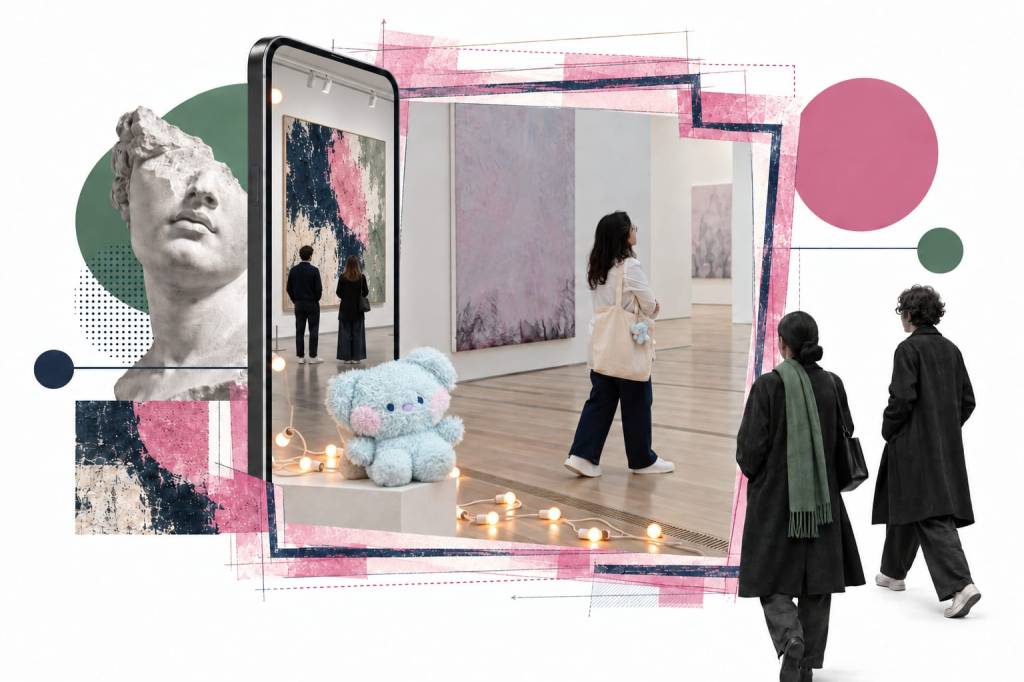
Dopo il feed: RM, @arts.withnamjoon e la costruzione di un pubblico dell’arte
RM, la mediazione di Arts with Namjoon e il ruolo delle istituzioni nell’era dei nuovi alfabeti culturali
After the Feed: RM, @arts.withnamjoon, and Building an Art Audience
RM, Arts with Namjoon, and Institutional Mediation in the Age of New Cultural Literacies
Journal


