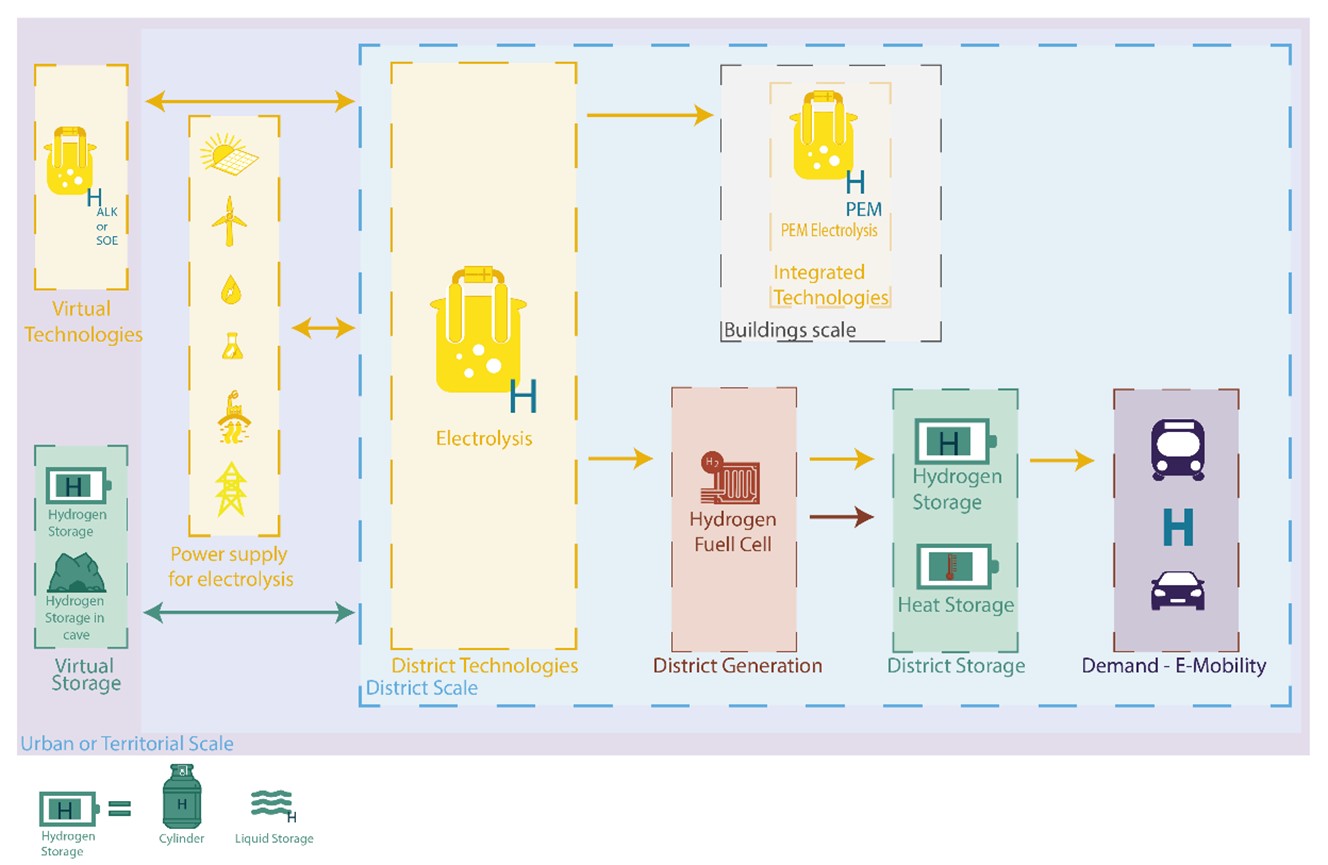
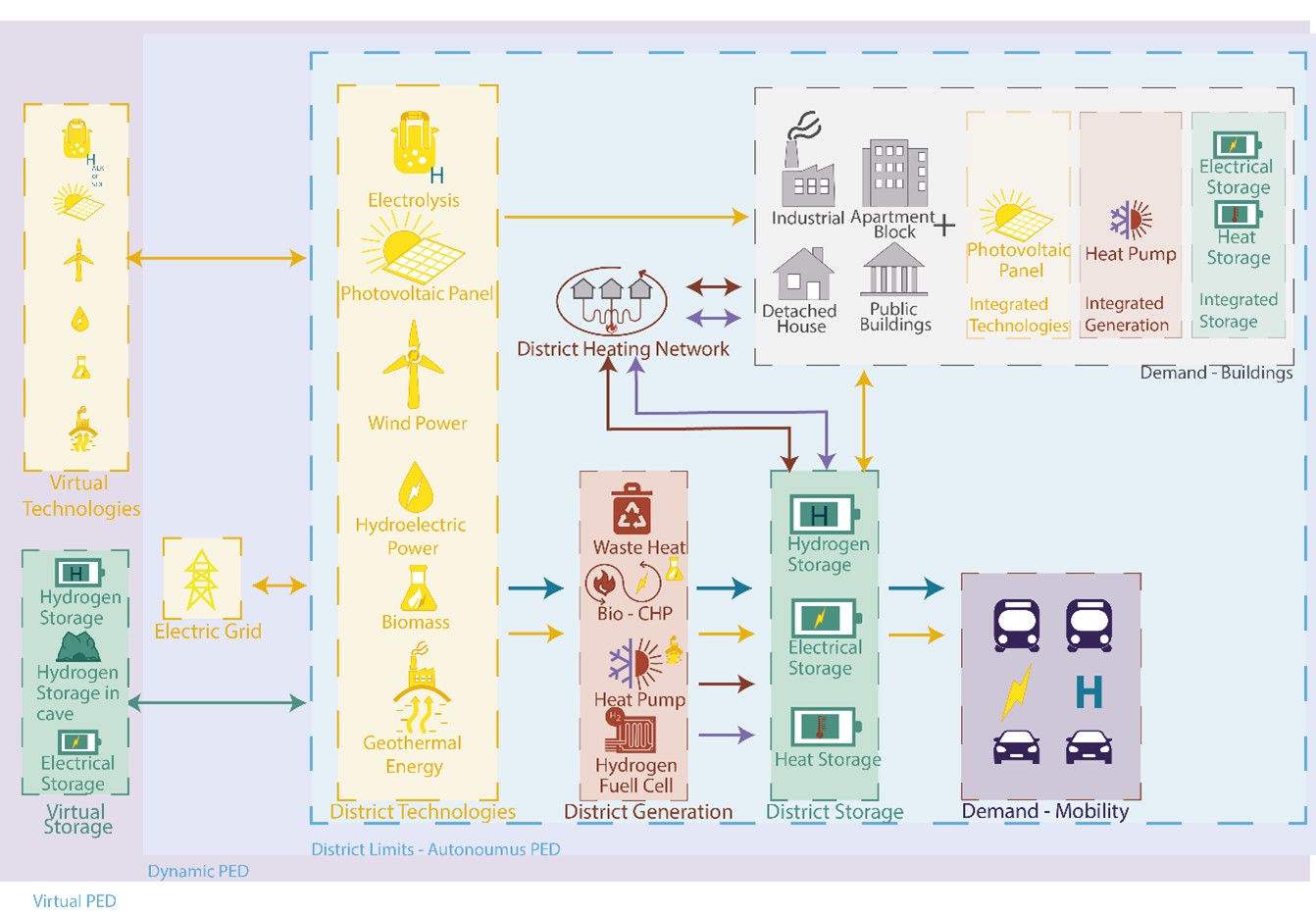
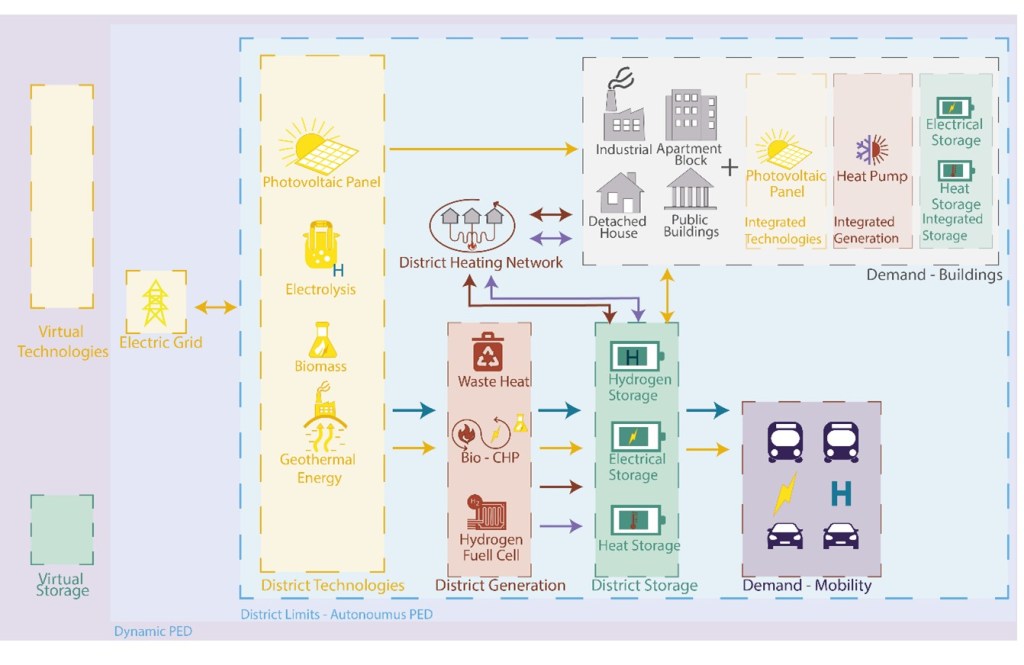
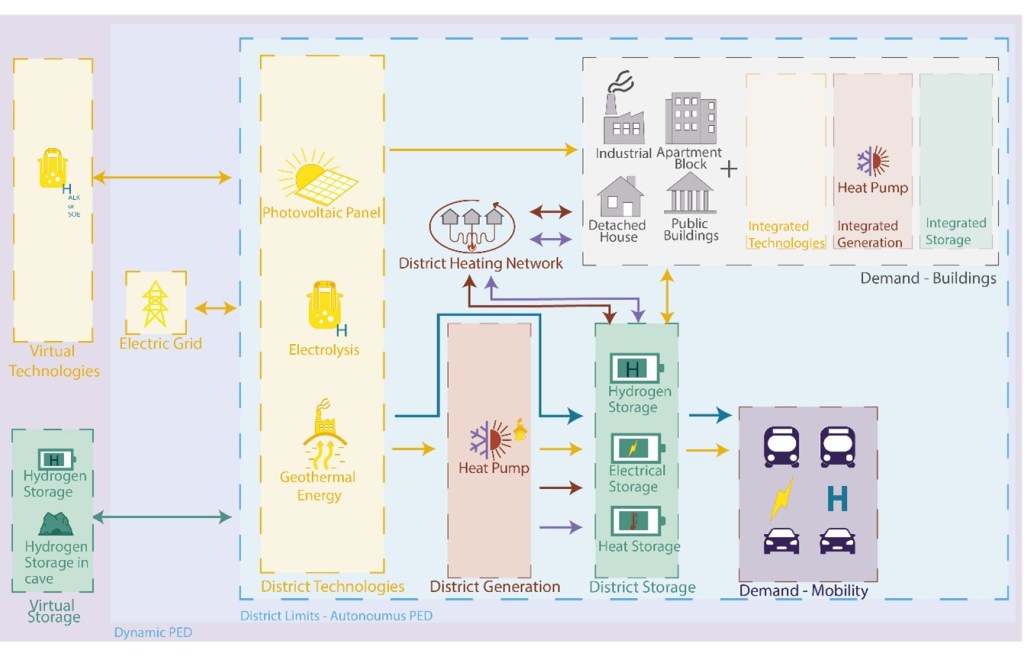
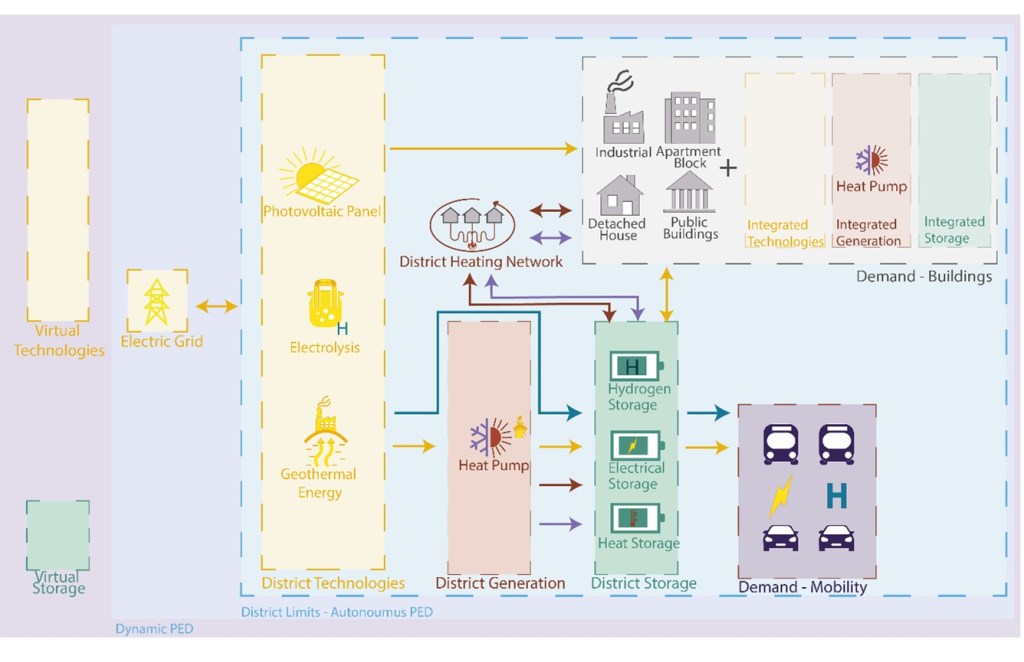
Abstract: The transition towards sustainable energy systems requires innovative solutions for the decarbonization of the building and transport sectors, particularly within Positive Energy Districts (PEDs). This study explores the role of hydrogen technologies for production, storage, distribution, and mobility in PEDs through a comparative analysis of 128 international case studies. The goal is to identify the most effective and integrable technologies to support the operation of PEDs and to propose their integration within a generalized PED framework. Based on this analysis, the study formulates tailored implementation proposals for three representative climate zones (continental, oceanic, and Mediterranean), with specific considerations for geological features such as karstic formations. The findings highlight that hydrogen technologies are strategic in continental and oceanic climates, whereas in Mediterranean contexts, the energy demand can be largely met by conventional renewable energy sources, making hydrogen integration unnecessary. This research provides a systemic framework for the integration of hydrogen technologies into PEDs, supporting urban energy planning aligned with local climatic and geomorphological conditions.
Year: 2022-2024
Affiliation: University of Catania, Italy and VTT Research Centre of Finland
Typology: Research Developed as part of the doctoral dissertation
Research project connected to: Positive Energy District (PED) – Operational Models in Different Climate Contexts