
Dopo il feed: RM, @arts.withnamjoon e la costruzione di un pubblico dell’arte
RM, la mediazione di @arts.withnamjoon e il ruolo delle istituzioni nell’era dei nuovi alfabeti culturali
After the Feed: RM, @arts.withnamjoon, and Building an Art Audience
RM, @arts.withnamjoon, and Institutional Mediation in the Age of New Cultural Literacies
Caso/Case: RM e il progetto @arts.withnamjoon / RM and the @arts.withnamjoon Project
Scala/Scale: piattaforme digitali, istituzioni museali e fandom transnazionale / Digital Platforms, Museum Institutions, and Transnational Fandom
Orizzonte progettuale/Strategic Vision: trasformare l’influenza personale in una soglia di accesso all’arte e alla frequentazione culturale / Transforming personal influence into a threshold of access to art and cultural attendance
Domanda/The Issue: quali condizioni permettono all’engagement nato intorno a una figura globale di diventare ricerca, visita museale e autonomia interpretativa? / Which conditions enable the engagement surrounding a global figure to turn into research, museum visitation, and interpretive autonomy?
Questo articolo sviluppa la cornice teorica delineata in “L’Economia dell’Anticipazione“. Leggi l’analisi completa qui.
This article expands on the theoretical framework outlined in “The Economy of Anticipation“. Read the full analysis here.
English version below
ITA
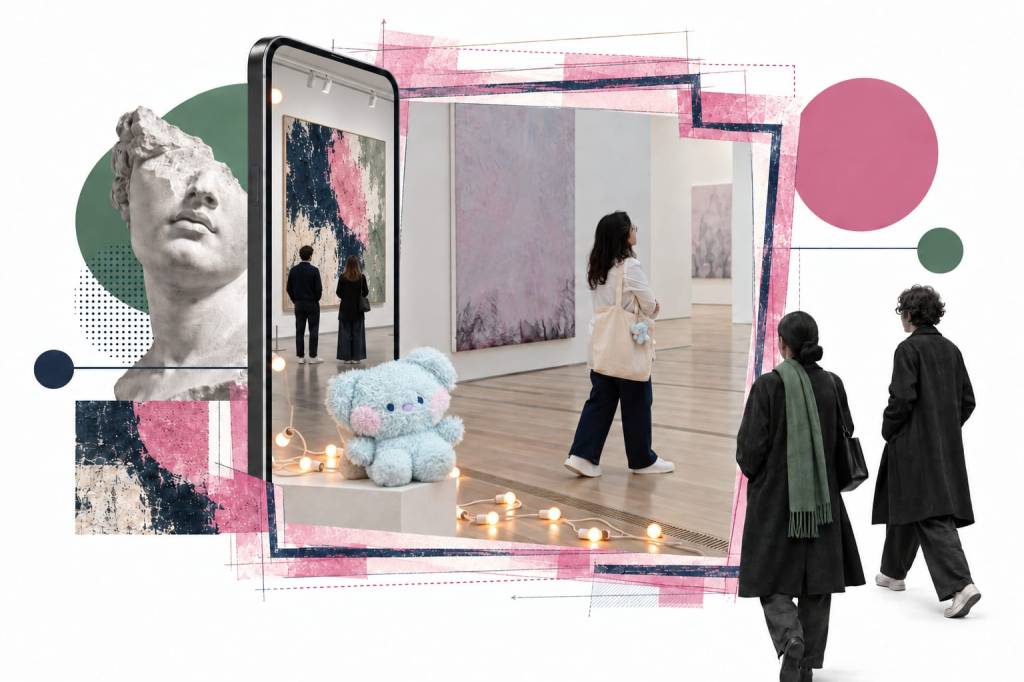
RM pubblica la fotografia di un’opera, di una sala o del biglietto di una mostra. Il contenuto appare in un profilo seguito principalmente per la musica dei BTS, ma dirige temporaneamente l’attenzione verso un artista, una collezione o un’istituzione. Alcuni follower identificano ciò che vedono, cercano il museo, ricostruiscono l’itinerario e raggiungono le stesse opere. L’accesso all’arte passa attraverso una relazione di fiducia costruita in un altro campo culturale: la musica, i testi e la presenza pubblica di Kim Namjoon (conosciuto anche come RM – leader dei BTS), diventano la soglia attraverso cui avvicinarsi a luoghi che una parte del pubblico non avrebbe cercato autonomamente.
Questa influenza deriva dalla continuità. Visite, letture, collezionismo e interesse per l’arte moderna e contemporanea — con una particolare attenzione verso gli artisti coreani — compongono nel tempo un orientamento riconoscibile. RM condivide un’abitudine culturale e rende possibile seguirne i percorsi. La Korea Tourism Organization ha organizzato alcuni di questi luoghi in RM’s Pick: Seoul Art Tour, un itinerario che collega Seoul Museum of Art, Gana Art Center, PKM Gallery, Leeum Museum of Art e National Museum of Korea. Una pratica personale viene tradotta in una geografia culturale attraversabile dal pubblico.
Tra il contenuto pubblicato e l’esperienza del pubblico rimane uno spazio interpretativo. Una fotografia può indicare un’opera senza renderne leggibili la ricerca dell’artista, il contesto storico o il rapporto con la mostra. La curiosità ha trovato un oggetto; deve ancora acquisire gli strumenti per interrogarlo.
È in questo intervallo che si colloca @arts.withnamjoon, il progetto curato da Claudia Leone. Mediatrice e divulgatrice culturale con una formazione che unisce economia, gestione del patrimonio, museologia e audience development, Leone ha sviluppato inizialmente una ricerca sull’influenza culturale di RM, affiancandola a un’indagine rivolta ai fan. Il progetto editoriale è nato successivamente per condividere approfondimenti sulle opere, sulle mostre e sugli artisti incontrati attraverso i percorsi di RM.
Il progetto introduce una seconda infrastruttura. RM orienta lo sguardo; Leone organizza le tracce lasciate da quello sguardo. L’opera intravista nel feed viene ricondotta all’autore, alla mostra, al contesto e alle domande che può aprire. La notorietà produce il contatto iniziale. La mediazione costruisce il tempo e le condizioni necessari per soffermarsi. Le due funzioni operano con strumenti differenti. La prima si fonda sulla portata e sulla credibilità personale. La seconda richiede ricerca, selezione, interpretazione e capacità di rendere accessibili conoscenze specialistiche senza svuotarle. Il loro rapporto mostra che l’art influencing funziona come un ecosistema nel quale personalità pubbliche, mediatori, istituzioni e pratiche del pubblico assumono responsabilità distinte.
Il lavoro di Leone nasce, inoltre, dentro il pubblico al quale si rivolge. Linguaggi, riferimenti e forme di fiducia del fandom costituiscono già il contesto nel quale viene introdotta la competenza museologica. La mediazione cresce all’interno dell’attenzione esistente e può orientarla verso osservazione, approfondimento e ricerca. Anche il termine Namjooning segnala questa trasformazione. Indica una pratica associata alla visita di musei, alla lettura, al rapporto con la natura e a un tempo dedicato alla riflessione. Nel contesto del Gallery Wellness Festival 2023, la National Gallery Singapore lo ha incorporato in un percorso che accostava opere della propria collezione a brani dei BTS. Un comportamento nato nel fandom è entrato così nel dispositivo interpretativo di un museo.
L’adozione istituzionale documenta la diffusione del fenomeno. La profondità dell’esperienza rimane variabile. Raggiungere una mostra perché vi è stato RM può produrre una fotografia analoga alla sua, una visita veloce oppure l’inizio di un interesse durevole. Azioni esteriormente simili possono contenere esiti culturali molto diversi. Visualizzazioni, condivisioni, ricerche e presenze registrano lo spostamento dell’attenzione. Descrivono con minore precisione il tempo dedicato alle opere, le fonti consultate, la capacità di formulare un giudizio e l’eventuale ingresso del museo nelle pratiche abituali di una persona.
Il caso produce così un attrito con una critica troppo rapida dell’engagement. Le metriche delle piattaforme non esauriscono il valore culturale, ma registrano una soglia concreta: qualcuno ha cambiato direzione, ha incontrato un artista o ha raggiunto un luogo. La questione decisiva riguarda ciò che quell’attenzione trova ad attenderla.
Nel 2026 il riconoscimento istituzionale del percorso di RM ha raggiunto una nuova scala. Il National Museum of Korea lo ha nominato Global Public Relations Ambassador, affidandogli un ruolo nella promozione internazionale del patrimonio culturale coreano.
Il 3 ottobre 2026 aprirà, inoltre, RM x SFMOMA: Between You and Me, la prima mostra museale a presentare opere provenienti dalla sua collezione personale. Il progetto riunirà duecento lavori delle collezioni di RM e SFMOMA, mettendo in relazione artisti coreani moderni e contemporanei con opere provenienti da altri contesti. La curatela è affidata a RM insieme ad América Castillo e Hyoeun Kim di SFMOMA.
Il passaggio dalla condivisione digitale alla curatela modifica la responsabilità esercitata. Occorre selezionare relazioni, costruire un percorso e rendere pubblica una collezione privata attraverso il confronto con le competenze e la storia del museo. La mostra offrirà un terreno concreto per osservare come una sensibilità personale venga tradotta in un dispositivo espositivo rivolto a pubblici differenti.
@arts.withnamjoon accompagna questa traiettoria da una posizione autonoma. Il progetto segue gli interessi di RM ed estende progressivamente la ricerca oltre i suoi riferimenti immediati, introducendo contenuti e riflessioni personali sull’arte contemporanea. Il punto di accesso rimane riconoscibile; il campo di osservazione può continuare ad ampliarsi.
Questa apertura è centrale nella costruzione di un pubblico. Il fandom può iniziare ripercorrendo un itinerario; acquista consistenza culturale quando sviluppa domande proprie: quali altri lavori ha realizzato l’artista, perché l’opera è esposta in quel modo, quali narrazioni attraversano la collezione, che cosa cambia tra il contesto coreano e quello occidentale?
L’influenza personale apre il percorso. La mediazione introduce la distanza necessaria perché il pubblico possa riconoscere un proprio interesse, modificarlo e anche dissentire dalle preferenze che lo hanno inizialmente attivato. La capacità di scegliere cresce progressivamente oltre la dipendenza dalla figura pubblica.
Questa possibilità convive con tensioni concrete. La notorietà può concentrare l’attenzione su pochi artisti; gli algoritmi privilegiano immagini e nomi facilmente riconoscibili; le istituzioni possono trattare il fandom come una riserva di visitatori già disponibile. Una mediazione sviluppata dentro la comunità deve, quindi, preservare rigore, trasparenza delle fonti e autonomia editoriale.
Per i musei, il caso rende visibile un pubblico che arriva con pratiche, conoscenze e forme di autorità già sviluppate. Accoglierlo richiede fonti accessibili, occasioni di approfondimento e dispositivi capaci di trasformare la partecipazione in comprensione e risposta.
RM mostra come un interesse personale continuato possa modificare itinerari culturali ed entrare progressivamente nelle pratiche delle istituzioni museali. Claudia Leone rende visibile il lavoro necessario per trasformare quelle traiettorie in percorsi di conoscenza.
L’engagement registra il momento in cui lo sguardo cambia direzione. La pratica culturale prende forma quando il pubblico trova gli strumenti per soffermarsi e, infine, scegliere autonomamente dove guardare.
ENG
RM posts a photograph of an artwork, an exhibition room, or a museum ticket. The content appears on a profile followed primarily for the music of BTS, yet it temporarily redirects attention toward an artist, a collection, or an institution. Some followers identify what they see, search for the museum, reconstruct the itinerary, and reach those very same works. Access to art operates through a bond of trust forged in a different cultural sphere: the music, lyrics, and public presence of Kim Namjoon (also known as RM, leader of BTS) become the threshold through which an audience approaches places it might not otherwise have sought out independently.
This influence derives from continuity. Visits, reading, collecting, and a sustained interest in modern and contemporary art—with a particular focus on Korean artists—compose a recognizable orientation over time. RM shares a cultural habitus and makes it possible to follow its trajectories. The Korea Tourism Organization consolidated several of these locations into RM’s Pick: Seoul Art Tour, an itinerary connecting the Seoul Museum of Art, Gana Art Center, PKM Gallery, Leeum Museum of Art, and the National Museum of Korea. A personal practice is thus translated into a traversable cultural geography for the public.
Between the published content and the audience’s experience remains an interpretive space. A photograph can point to an artwork without rendering legible the artist’s research, the historical context, or its relationship to the exhibition. Curiosity has found an object; it has yet to acquire the tools to interrogate it.
It is within this interval that @arts.withnamjoon, a project curated by Claudia Leone, positions itself. As a cultural mediator and educator with a background combining economics, heritage management, museology, and audience development, Leone initially developed a research project on RM’s cultural influence, alongside an inquiry aimed at fans. The editorial project was subsequently established to share in-depth analysis of the works, exhibitions, and artists encountered through RM’s journeys.
The project introduces a second infrastructure. RM directs the gaze; Leone organizes the traces left by that gaze. The artwork glimpsed in a feed is contextualized back to its author, exhibition, historical framework, and the questions it can open up. Stardom generates the initial contact; mediation constructs the time and conditions necessary to linger. The two functions operate with different mechanisms: the former relies on reach and personal credibility, while the latter demands research, selection, interpretation, and the ability to render specialized knowledge accessible without stripping it of its complexity. Their relationship demonstrates that art influencing functions as an ecosystem in which public figures, mediators, institutions, and audience practices assume distinct responsibilities.
Furthermore, Leone’s work emerges from within the audience it addresses. The languages, references, and modes of trust characteristic of the fandom constitute the existing framework into which museological expertise is introduced. Mediation grows within this pre-existing attention and can orient it toward observation, deeper inquiry, and research. The term Namjooning itself signals this transformation, denoting a practice associated with visiting museums, reading, connecting with nature, and dedicating time to reflection. Within the context of the 2023 Gallery Wellness Festival, the National Gallery Singapore incorporated this concept into an itinerary that paired works from its collection with BTS songs. A behavior born within fandom thus entered the interpretive apparatus of a museum.
Institutional adoption documents the diffusion of the phenomenon, though the depth of the experience remains variable. Reaching an exhibition because RM visited it can produce an identical photo to his, a swift visit, or the beginning of a lasting interest. Outwardly similar actions can contain vastly different cultural outcomes. Views, shares, searches, and physical attendance record the shift in attention, but describe with far less precision the time dedicated to the works, the sources consulted, the capacity to formulate a judgment, or the eventual integration of the museum into a person’s routine practices.
The case thus creates friction with an overly hasty critique of engagement. Platform metrics do not exhaust cultural value, but they do record a concrete threshold: someone shifted direction, encountered an artist, or reached a venue. The decisive question concerns what stands waiting for that attention once it arrives.
By 2026, institutional recognition of RM’s trajectory reached a new scale. The National Museum of Korea appointed him Global Public Relations Ambassador, entrusting him with a formal role in promoting Korean cultural heritage internationally.
On October 3, 2026, RM x SFMOMA: Between You and Me will open, marking the first museum exhibition to feature works from his personal collection. The project will bring together two hundred works from the collections of RM and SFMOMA, placing modern and contemporary Korean artists in dialogue with works from other contexts. Co-curation is led by RM alongside América Castillo and Hyoeun Kim of SFMOMA.
The transition from digital sharing to curatorial practice alters the responsibility exercised. It requires selecting relationships, building a narrative path, and making a private collection public in dialogue with the expertise and history of the museum. The exhibition will offer concrete ground to observe how a personal sensibility is translated into an exhibitionary apparatus aimed at diverse publics.
@arts.withnamjoon accompanies this trajectory from an autonomous vantage point. The project tracks RM’s interests while progressively extending its research beyond his immediate references, introducing personal reflections and commentary on contemporary art. The point of entry remains recognizable, yet the field of observation continuously expands.
This openness is central to audience development. Fandom may begin by retracing an itinerary, but it acquires cultural substance when it formulates its own questions: what other works has the artist produced, why is the piece displayed in this manner, what narratives run through the collection, what changes between the Korean and Western contexts?
Personal influence opens the path; mediation introduces the distance necessary for the public to recognize its own interest, refine it, and even dissent from the preferences that initially prompted it. The capacity for critical agency grows progressively beyond reliance on the public figure.
This possibility coexists with tangible tensions. Stardom can concentrate attention on a small number of artists; algorithms prioritize easily recognizable images and names; institutions can treat fandom as a readily available reserve of visitors. A mediation practice developed within a community must therefore preserve rigor, transparency of sources, and editorial autonomy.
For museums, the case illuminates an audience that arrives equipped with pre-developed practices, knowledge, and forms of authority. Welcoming this public requires accessible sources, opportunities for deeper study, and mechanisms capable of transforming participation into comprehension and agency.
RM demonstrates how sustained personal interest can alter cultural itineraries and progressively enter the practices of museum institutions. Claudia Leone renders visible the labor required to transform those trajectories into pathways of knowledge.
Engagement registers the moment the gaze shifts direction; cultural practice takes shape when the audience finds the tools to linger and, ultimately, choose independently where to look.


Rispondi